
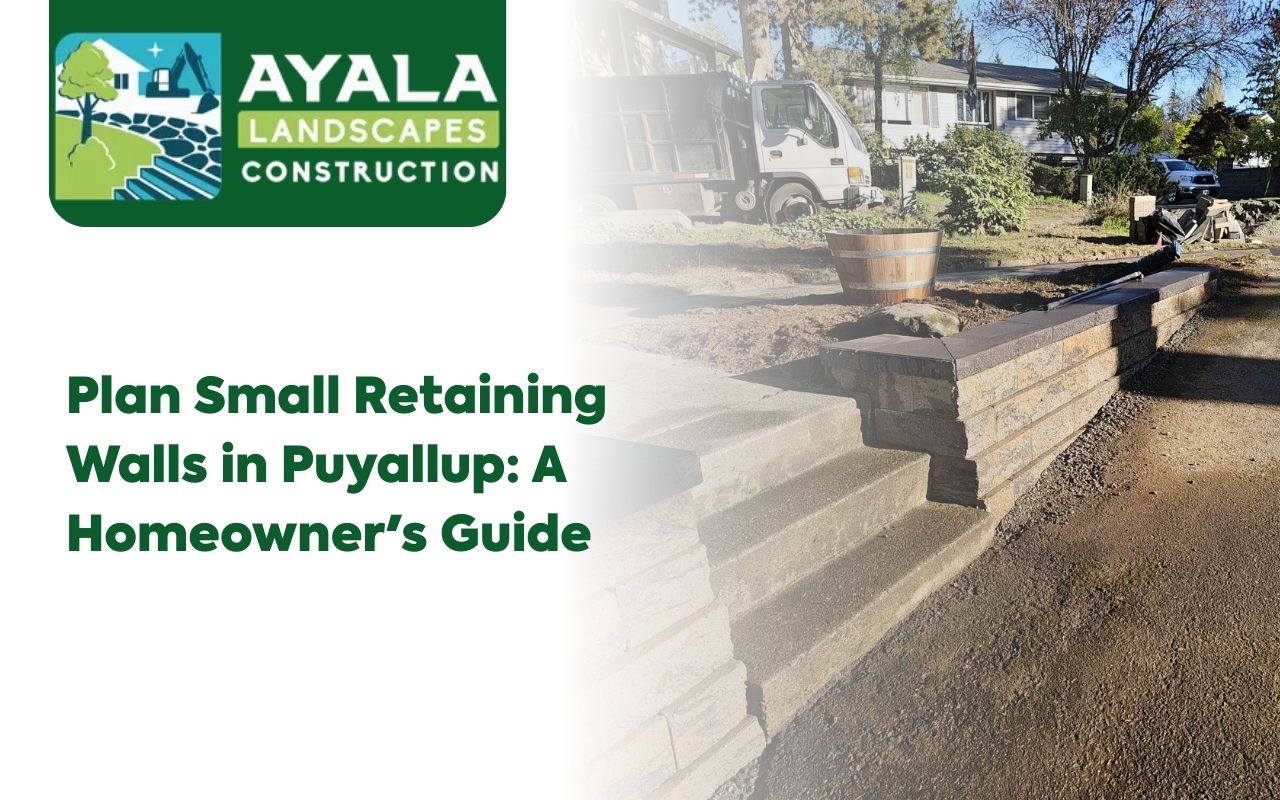
Small Retaining Walls in Puyallup can turn a tight backyard into a space that feels useful and calm. Instead of only adding structure, a small wall helps shape the land and create clean, functional zones. In Puyallup, where slopes and rain often meet, this kind of project can also support better water control.
With the right layout, you can add a garden wall, build simple terracing, and reduce runoff. As a result, you may see less erosion and a more enjoyable yard. This guide covers key choices so your wall looks good and works well for years.
Why Small Retaining Walls Matter in Puyallup
Puyallup’s rolling terrain and regular rain can cause soil to shift over time. Therefore, a small wall can hold back loose soil and protect planting areas. It also helps you turn a slope into levels that feel safer to walk and easier to use.
Terracing can add strong visual structure too. Moreover, with smart drainage planning, water can move away from weak spots instead of pooling. If you want to explore local options, see retaining wall services in Puyallup.
Signs Your Yard Needs a Garden Wall
A garden wall can solve several common yard problems. For example, it can support a sloped bed that keeps washing out, or it can create a flat space for plants and seating. Before you build, look for the issues below.
- Soil erosion after heavy rain
- Uneven ground that feels unstable
- Water pooling near patios or planting beds
- Slopes that make mowing or planting hard
- Garden areas that need clearer borders
Check Your Terrain Before You Start
Walk your yard and mark steep slopes, soft spots, and places where water gathers. Then measure the height change you want to fix, because that number guides the wall layout and material needs. Also watch how rainwater travels across the space.
Next, dig a small test hole to learn your soil type. Sandy soil drains fast but may shift, while clay holds moisture and can stay heavy. As you plan terracing, note sun exposure for each level so plants can thrive.
Materials That Work Well for Small Retaining Walls
Choosing the right material shapes the look, durability, and upkeep of your wall. For example, block systems can stack neatly, while stone can blend into a natural garden style. To compare choices in detail, review retaining wall materials.
- Concrete blocks: consistent size and simple stacking
- Natural stone: rustic look with unique texture
- Timber: warm style, yet shorter lifespan
- Decorative blocks: modern look with stone-like finishes
Terracing Ideas That Fit Small Yards
Terracing helps you use space you already have, especially on hillsides. Instead of one tall wall, you can create two or three shorter tiers that feel more natural. As a result, each level becomes a planting zone with easier access.
- Two-tier planting beds for flowers and shrubs
- Low terraces that frame a small patio edge
- Raised garden rows for vegetables and herbs
- Curved tiers that follow existing pathways
If you want inspiration for tiered layouts, explore retaining wall ideas and adapt the concepts to your Puyallup yard.
Design Tips for a Clean, Balanced Look
Start with height. Walls under four feet are often considered small, and they can still make a big impact. Choose a straight line for a crisp, modern shape, or use gentle curves for a softer garden feel.
Also match colors and textures to your home and hardscape. For instance, a simple cap can finish the top edge and create casual seating. If you want a wall built to last, see construction quality methods for durability.
Drainage Basics That Protect Your Wall
Drainage is often the difference between a wall that lasts and a wall that shifts. Therefore, plan water control from day one. A drain pipe and gravel backfill can move water away and reduce pressure behind the wall.
Also consider weep gaps or small outlets so trapped water can escape. If you want a deeper checklist, use these retaining wall drainage tips to guide your setup.
Building Codes and Permits in Puyallup
Before you dig, check local rules on height limits, setbacks, and permits. In many cases, a wall under four feet may not need engineering plans. However, setbacks and property boundaries can still apply, so it helps to confirm details early.
By following the rules, you avoid delays and protect your investment. If you need help planning around your lot lines, you can also reach out to Ayala Landscapes Construction LLC for guidance.
DIY vs. Hiring a Pro
DIY can be a good fit for short walls and simple layouts. It also lets you work at your own pace. On the other hand, a pro can handle tricky slopes, drainage challenges, and fast timelines with fewer surprises.
If you want a wall that stays straight and drains well through wet seasons, professional help can reduce risk. Still, for small projects, many homeowners enjoy the hands-on approach.
Simple Steps to Build a Small Retaining Wall
A steady base matters most. First, mark your wall line with stakes and string. Then dig a trench deep enough for a compact gravel base and the first course of block. Keep the base level, because every row depends on it.
After you place the first row, backfill with gravel and add drainage features. Continue stacking with staggered joints for strength, and finish with a top cap for a clean edge. As you go, re-check level often so the wall stays aligned.
Frequently Asked Questions
How tall can a small retaining wall be?
Many homeowners keep walls under four feet. However, local rules may still apply, so check before building.
Do I need drainage behind a short wall?
Yes, in most cases. Even a low wall can fail if water builds up behind it over time.
What material is easiest for beginners?
Concrete blocks are often easiest because they are uniform and made for stacking. Still, good base prep is key.
Can terracing reduce erosion on slopes?
Yes. Terracing breaks a slope into smaller levels, which slows water and helps soil stay in place.
When should I hire a professional?
If your slope is steep, drainage is complex, or you want multiple tiers, a pro can help you avoid costly mistakes.
Make the Most of Your Small Retaining Wall
Once installed, Small Retaining Walls in Puyallup can reduce erosion and help guide water away during rainy months. Terracing can also create flat planting zones that get better sunlight, which supports healthier growth.
Over time, your wall can become a visual focal point, especially with lighting and layered plants. With durable materials and smart drainage, Small Retaining Walls in Puyallup can add long-term function and a more polished landscape.
Conclusion
With the right plan, Small Retaining Walls in Puyallup can improve drainage, stabilize slopes, and create more usable garden space. By choosing materials carefully and building on a solid base, you can get a result that looks clean and performs well.
Whether you build it yourself or hire help, keep drainage and layout at the center of your design. If you want expert support, connect with Ayala Landscapes Construction LLC to plan your next steps.