
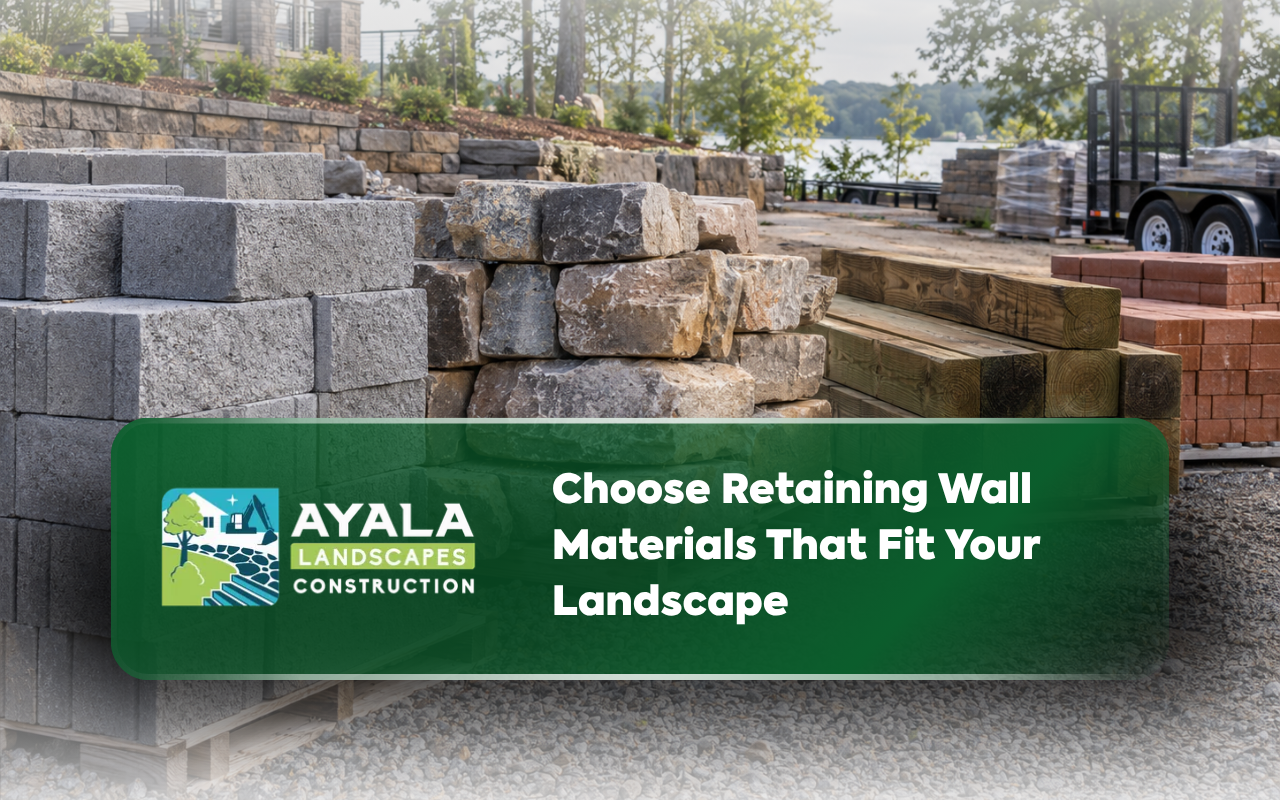
A retaining wall needs materials suited to its height, purpose, drainage, surrounding soil, and landscape design. Choosing correctly helps create a stable structure that complements the property and remains manageable to maintain.
Concrete blocks, natural stone, timber, brick, and poured concrete each provide different structural and visual advantages. This guide compares the best retaining wall materials for Spanaway properties and explains the factors that should guide your decision.
At Ayala Landscapes Construction LLC, we have served local property owners since 2014. Explore our retaining wall material guide before selecting an option for your landscape.
How Retaining Wall Materials Affect Long-Term Performance
The material used in a retaining wall affects appearance, maintenance, installation, and expected performance. However, no material can compensate for poor drainage, an unstable base, or an unsuitable design.
A decorative garden wall and a tall wall supporting a slope have different requirements. Material selection should begin after evaluating soil, elevation changes, water movement, nearby structures, and the wall’s intended purpose.
Important Planning Factors
- Wall height and amount of soil being retained
- Existing slope and soil conditions
- Drainage and groundwater movement
- Nearby driveways, patios, buildings, or utilities
- Desired appearance and landscape style
- Maintenance expectations and available budget
Compare the Best Retaining Wall Construction Materials
The best retaining wall construction materials depend on the project rather than one universal recommendation. A small planting bed wall has different needs than a wall supporting a steep slope or nearby patio.
Retaining Wall Material Comparison
| Material | Suitable Uses | Main Advantages | Primary Considerations | Visual Style |
|---|---|---|---|---|
| Concrete blocks | Terraces, slopes, gardens, and structured landscapes | Consistent size, strength, and design flexibility | Base, drainage, setback, and system specifications | Traditional or contemporary |
| Natural stone | Garden walls and natural-looking landscapes | Distinctive texture and long-lasting character | Weight, irregular sizing, labor, and installation skill | Organic and timeless |
| Treated timber | Smaller walls, raised beds, and rustic landscapes | Warm appearance and straightforward shaping | Moisture exposure, decay, and future replacement | Rustic and informal |
| Brick | Decorative walls and traditional properties | Classic color and architectural coordination | Structural support, mortar condition, and drainage | Classic and formal |
| Poured concrete | Custom structural walls and space-conscious designs | Continuous construction and flexible finishes | Formwork, reinforcement, drainage, and cracking control | Clean and architectural |
Key Takeaway
The best material depends on structure, drainage, appearance, installation needs, and how much pressure the wall must retain.
Concrete Blocks Offer Strength and Flexible Design Options
Concrete blocks are known for durability and versatility. They come in different colors, shapes, sizes, and textures, allowing the wall to coordinate with patios, walkways, steps, and other hardscape features.
Interlocking wall systems may include specific requirements for base material, drainage aggregate, setback, reinforcement, and maximum wall height. Installers should follow the selected system’s specifications rather than treating every block wall the same.
Learn more about block retaining walls in Spanaway when considering a structured and customizable option.
Natural Stone Creates a Timeless Retaining Wall Look
Natural stone blends easily with gardens, wooded areas, and organic landscapes. Granite and other suitable stones can introduce natural color variation and texture.
Stone walls often require more installation time because individual pieces vary in size, shape, and weight. Each stone must be placed carefully to maintain alignment, contact, and visual balance.
Choose the Best Wood to Use for Retaining Wall Projects
Property owners researching the best wood to use for retaining wall construction should prioritize material rated for ground contact and exterior moisture exposure. Untreated indoor lumber is not appropriate for soil-retaining applications.
Pressure-treated structural lumber is commonly considered for smaller landscape walls. Suitable naturally durable species may also be available. Wood selection should account for regional availability, treatment, fasteners, drainage, wall height, and soil contact.
Even properly selected timber has different long-term expectations than concrete or stone. Continuous moisture, poor drainage, damaged protective treatment, and soil contact can accelerate deterioration.
Wood Retaining Wall Reminder
Choose wood rated for its intended exterior and ground-contact use. Every cut, connection, and exposed area should follow the manufacturer’s treatment guidance.
Retaining Wall Blocks vs Stone for Spanaway Landscapes
A retaining wall blocks vs stone comparison should consider installation, appearance, consistency, maintenance, and project complexity. Both materials can create attractive walls, but they produce different results.
Manufactured blocks provide uniform sizes that can simplify pattern planning and alignment. Many systems also include compatible caps, corners, and reinforcement components.
Natural stone offers unique textures and less uniformity. This variation creates an organic appearance, but it may require additional sorting, cutting, fitting, and installation time.
Blocks or Stone Decision Guide
- Choose blocks when consistent sizing and repeatable patterns are priorities.
- Consider stone when natural variation and organic texture are preferred.
- Compare installation requirements rather than material price alone.
- Evaluate how each option coordinates with existing hardscaping.
- Confirm that the selected system suits the wall’s structural purpose.
Key Takeaway
Blocks often provide cleaner alignment and system consistency, while stone creates a more natural appearance with more installation variation.
Match Retaining Wall Materials With Landscape Uses
Material selection should respond to how the wall will function. A decorative border around a planting bed does not experience the same pressure as a wall supporting a steep slope.
Concrete blocks may work well for structured terraces and landscape transitions. Natural stone can complement garden areas and rustic properties. Timber may suit smaller informal projects, while brick often coordinates with traditional architecture.
These general uses do not replace a site evaluation. Soil pressure, drainage, surcharge loads, and nearby structures may require a different material or engineered solution.
Prepare Drainage Before Installing Retaining Wall Materials
Water is one of the most important retaining-wall planning factors. Soil behind the wall can become heavier when saturated, increasing pressure on the structure.
A complete drainage approach may include free-draining aggregate, filter fabric, drainage pipe, appropriate outlets, and properly graded surrounding surfaces. The exact configuration depends on the wall system and property.
Ayala Landscapes Construction LLC provides professional retaining wall services for projects requiring coordinated material, base, drainage, and installation planning.
Understand the Retaining Wall Material Installation Process
Professional retaining wall material installation starts with the site rather than the visible blocks or stones. The installer must determine the layout, elevations, excavation requirements, base, drainage, and material quantities.
Installation Process Overview
- Evaluate the slope, soil, access, and surrounding structures.
- Confirm the wall layout, height, and intended function.
- Excavate for the base and required drainage components.
- Install and compact the specified foundation material.
- Place blocks, stone, timber, or structural components correctly.
- Add drainage aggregate, reinforcement, and backfill as required.
- Complete caps, grading, and surrounding landscape transitions.
The first course establishes alignment for the remaining wall. It must be level and positioned on a properly prepared base. Small errors at the bottom can become more noticeable as wall height increases.
Consider Construction Factors Beyond Appearance and Cost
Material appearance and initial price are important, but they should not be the only deciding factors. Installation labor, equipment access, excavation, drainage, soil removal, reinforcement, and future maintenance also influence the project.
Before Making a Final Selection
- Compare total installed cost instead of material price alone.
- Review expected exposure to soil and moisture.
- Confirm access for excavation and material delivery.
- Plan drainage and reinforcement requirements.
- Consider future repairs and maintenance needs.
- Verify local permit or engineering requirements.
Frequently Asked Questions About Retaining Wall Materials
Which retaining wall material lasts the longest?
Longevity depends on the complete system, including drainage, base preparation, installation, soil conditions, and maintenance. Concrete and suitable stone can perform well when installed correctly.
Are concrete blocks better than natural stone?
Neither option is universally better. Blocks provide consistent dimensions and system components. Stone offers natural variation and distinctive character but may require more detailed installation.
Can treated wood be used for retaining walls?
Properly rated treated lumber may suit some smaller landscape walls. Wood must be selected for exterior ground contact and installed with suitable drainage, fasteners, and structural support.
Does every retaining wall need drainage behind it?
Retaining walls generally require a way to manage water and reduce pressure. The appropriate drainage system depends on the wall material, soil, height, and surrounding property conditions.
How do I choose the right wall material?
Evaluate wall height, soil, drainage, nearby loads, maintenance, appearance, and budget. A professional site assessment can identify materials suited to the project’s actual requirements.
Build a Retaining Wall Suited to Your Property
Selecting the right material requires balancing appearance, strength, installation, drainage, maintenance, and cost. Concrete blocks, natural stone, timber, brick, and poured concrete each serve different landscape needs.
At Ayala Landscapes Construction LLC, we have served property owners since 2014. Our licensed, insured, and BBB-certified team can evaluate your Spanaway property and explain suitable retaining wall options.
Ready to compare materials and plan your project? Request your project consultation from Ayala Landscapes Construction LLC.