
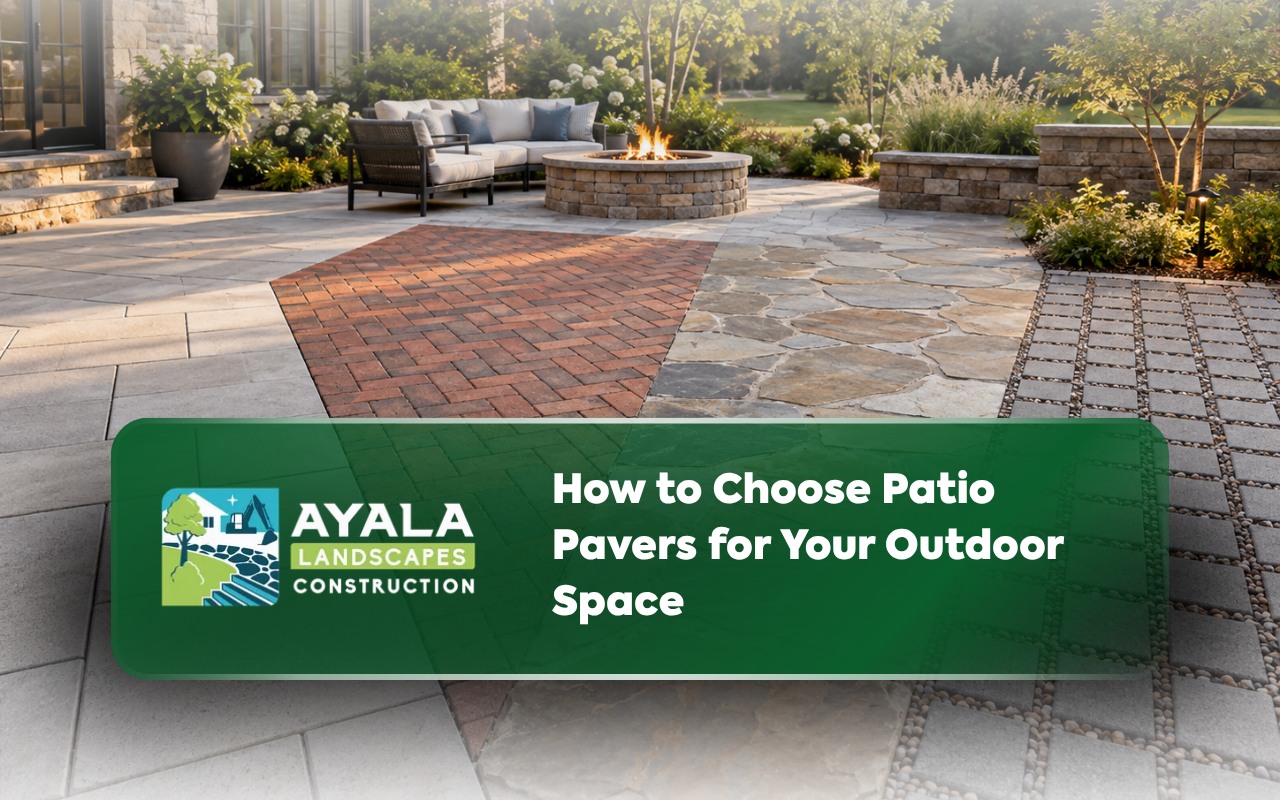
Choose patio pavers by comparing material, expected traffic, drainage, maintenance, and the size of your outdoor space. Concrete offers design flexibility, brick creates traditional character, and natural stone provides a distinctive finish. However, proper base preparation remains essential regardless of the material selected.
This guide helps residential and commercial property owners make a practical decision before choosing colors or patterns. It also covers patio paver layout ideas, patio pavers for small backyards, and installation details that can affect long-term performance.
Explore our professional patio paver services for help comparing materials, layouts, and preparation requirements.
Compare Patio Paver Materials Before Selecting a Design
Each material offers a different balance of appearance, durability, cost, and maintenance. The best option should support how the patio will be used rather than focusing only on how it looks in a product sample.
Popular Patio Paver Options
- Concrete pavers: Available in many shapes, colors, and textures for both contemporary and traditional properties.
- Brick pavers: Provide a warm, classic appearance for courtyards, walkways, and established landscapes.
- Natural stone: Offers unique surface and color variation but may require more sorting and installation planning.
- Permeable pavers: Can support water management when the base and drainage system are designed correctly.
Surface texture also matters. A heavily textured material may create visual interest but could make patio furniture less stable. Smooth surfaces may offer easier movement but need careful selection around wet areas.
Match Patio Pavers to the Way the Space Will Be Used
A decorative garden retreat does not face the same demands as an outdoor dining space. High-traffic patios require stable surfaces, consistent joints, and materials capable of supporting repeated use.
Patio Paver Use Comparison
| Patio Use | Suitable Option | Primary Advantage | Detail to Review |
|---|---|---|---|
| Residential gathering patio | Concrete or brick | Flexible design choices | Stains and furniture placement |
| Commercial seating area | Durable concrete pavers | Supports frequent traffic | Accessibility and stable joints |
| Decorative outdoor retreat | Natural stone | Distinctive natural appearance | Surface and thickness variation |
| Large multipurpose patio | Large-format concrete pavers | Clean, open appearance | Base uniformity and layout cuts |
Key Takeaway
The best paver choice should match traffic, furniture placement, drainage, maintenance needs, and the visual style of the property.
Use Patio Paver Layout Ideas That Fit the Space
Good layout planning helps the patio feel intentional instead of crowded or disconnected. Straight patterns can make a small area feel cleaner, while borders can define edges and help separate dining, seating, or walkway zones.
Curved layouts may work well in garden areas, but they often require more cutting. A simple rectangular or square layout can be more practical for furniture, grills, and commercial seating arrangements.
Layout Ideas to Consider
- Running bond: A clean pattern for narrow patios and walkways.
- Basketweave: A traditional look for classic outdoor spaces.
- Herringbone: A stronger visual pattern for busy areas.
- Border accents: A way to define edges and seating zones.
- Large-format layout: A clean option for open patio designs.
Choose Patio Pavers for Small Backyards Carefully
Patio pavers for small backyards should help the space feel open, usable, and easy to move through. Too many colors, patterns, or borders can make a compact patio look busy.
For smaller patios, consider simpler patterns, fewer color changes, and furniture-friendly surfaces. A restrained design can make the patio feel larger while still creating a finished outdoor area.
Small Backyard Planning Tips
- Use a simple pattern to avoid visual clutter.
- Choose colors that coordinate with the home and landscape.
- Keep walkways clear around furniture and doors.
- Use borders only where they improve definition.
- Plan drainage before choosing the final layout.
Review Drainage Before Installing Any Paver Surface
Drainage planning should account for the building foundation, patio slope, downspouts, surrounding beds, and nearby hardscapes. Water collecting beneath or beside the installation may contribute to settlement, joint loss, or instability.
A site evaluation can identify whether the project needs grading corrections, drainage improvements, or additional excavation. These requirements should be included in the project scope before materials are ordered.
Key Takeaway
Drainage should be planned before excavation starts because the finished patio depends on the slope, base, and surrounding ground conditions.
Prepare the Ground Before Patio Paver Installation
The finished surface depends on what lies beneath it. Excavation, a compacted aggregate base, the bedding layer, and edge restraints must function together.
Soft soil or buried debris can require more preparation than a stable, previously undisturbed area. These site conditions may change the installation plan:
- Soil that remains soft after periods of rain
- Low areas where runoff regularly collects
- Tree roots crossing the proposed patio footprint
- Recently disturbed ground near construction work
- Existing concrete or damaged pavers requiring removal
- Limited access for excavation and compaction equipment
Learn more about our complete residential and commercial paver services for patios and related outdoor surfaces.
Understand What Affects Long-Term Paver Performance
Proper installation supports consistent joint spacing, planned drainage, and a more stable surface. Base depth, compaction, bedding material, edge restraints, and transitions must suit the site and intended use.
Areas connecting to steps, doors, walkways, or existing concrete require particular attention. These transitions affect accessibility and drainage. Improvised connections can create uneven edges or uncomfortable changes in elevation.
Review how patio paver installation works to understand the planning and preparation involved.
Avoid Common Mistakes When Choosing Patio Pavers
One common mistake is selecting a paver from a small sample without viewing it beside the property. Sunlight, shade, siding, masonry, and landscaping can change how its color appears.
Common Planning Mistakes
- Choosing material based only on its initial color
- Ignoring drainage or unstable ground conditions
- Using excessive pattern variation in a small area
- Overlooking surface texture and accessibility needs
- Comparing estimates without reviewing base preparation
- Failing to plan transitions around doors and walkways
Ask What Is Included in a Patio Paver Installation Service
A useful estimate should explain more than the cost of the visible pavers. Ask how the area will be excavated, what base materials are planned, and how the surface will manage water.
A professional patio paver installation service should also explain removal, disposal, grading, cutting, borders, edge restraints, and final cleanup. Understanding the complete scope makes it easier to compare contractors without selecting an incomplete proposal based on price alone.
Frequently Asked Questions
What are the best patio pavers for small backyards?
Small backyards often work best with simple patterns, limited color changes, and surfaces that allow furniture to sit evenly without making the space feel crowded.
What patio paver layout ideas work for outdoor seating?
Running bond, herringbone, simple square layouts, and border accents can work well when the pattern supports furniture placement and clear walking space.
Do patio pavers need drainage planning?
Yes. Drainage affects the base, slope, surrounding soil, and long-term surface stability. Water should move away from structures and avoid collecting under the patio.
Why does base preparation matter for patio pavers?
The base supports the finished surface. Poor excavation, weak compaction, or unstable soil can lead to movement, settlement, uneven edges, and drainage problems.
When should I hire a patio paver installation service?
Hire a professional when the project requires excavation, drainage planning, base preparation, cutting, edge restraints, or a layout that must connect with existing hardscapes.
Create a Patio Designed Around Your Property
The right patio pavers should support the property’s appearance, expected traffic, maintenance needs, and drainage conditions. Material selection shapes the design, but preparation and installation determine how effectively the finished surface performs.
At Ayala Landscapes Construction LLC, we create residential and commercial outdoor spaces backed by experience serving the area since 2014. Our BBB team can evaluate your patio area and explain suitable materials, layouts, and preparation options.
If you are ready to discuss your project, request your free estimate and begin planning a patio suited to your space.