
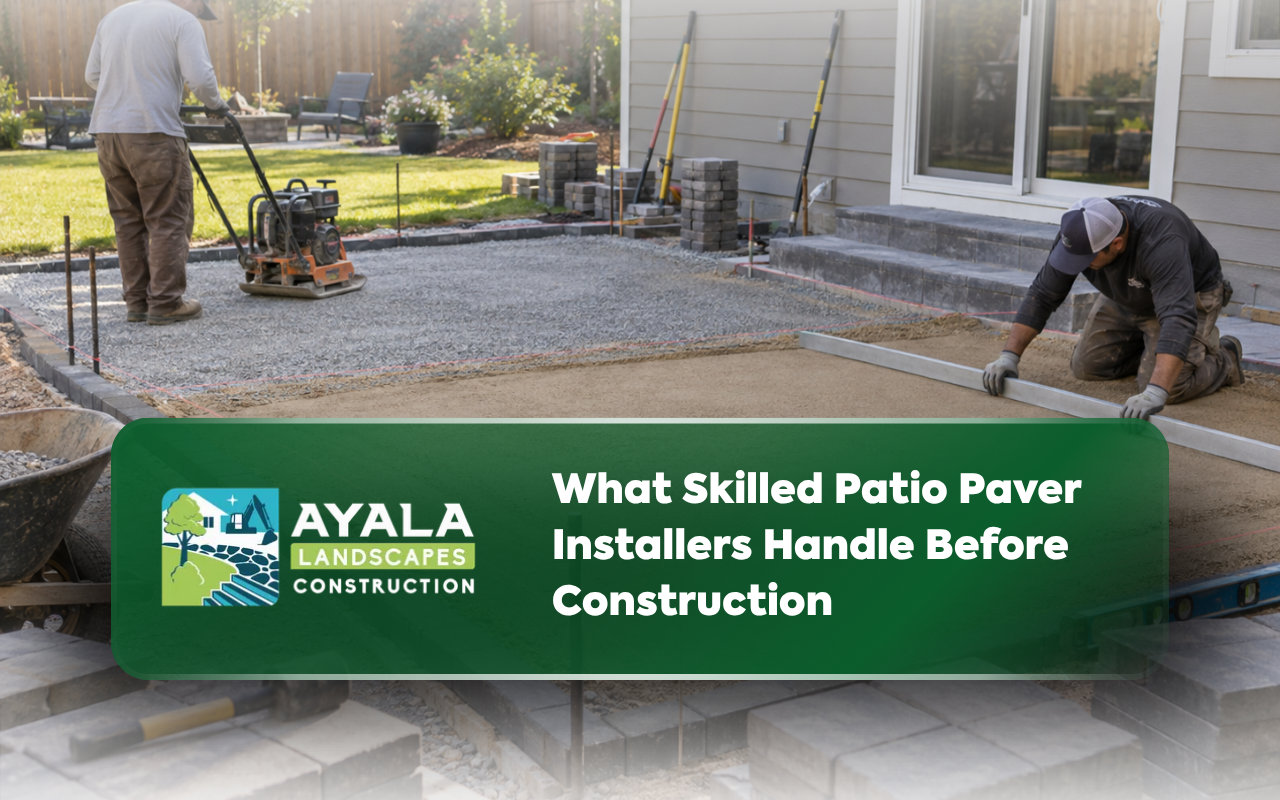
Homeowners often see the finished pavers but not the planning and preparation that make the surface perform well. Professional patio paver installers evaluate grade, access, drainage, base needs, and layout before the first paver is placed. Request your installation estimate when you want to understand what the project should include before work begins.
At Ayala Landscapes Construction LLC, we help homeowners prepare for patio projects with attention to site conditions and installation sequence.
Site Preparation Begins Before Any Pavers Arrive Onsite
The installation area should be measured, marked, and checked for access, drainage, elevation, and nearby structures. This early review helps determine excavation depth and how materials can be staged without damaging surrounding landscaping.
Excavation Depth Depends On Base And Site Conditions
Different soils and patio uses can require different preparation. The installer should remove enough material to accommodate the compacted base, bedding layer, and paver thickness while still achieving the planned final elevation.
Drainage Decisions Should Happen Before Base Installation Begins
Schedule your paver consultation before construction if water already collects near the house or patio area. The final surface should direct runoff intentionally instead of creating new low spots.
For dedicated options, visit our explore custom patio pavers page.
What Professional Paver Crews Do During Preparation Work
- Confirm final dimensions and layout.
- Mark elevations and drainage direction.
- Excavate to the required depth.
- Install and compact the base material.
- Prepare the bedding layer evenly.
Paver Placement Requires Consistent Lines And Joint Spacing
Even small alignment errors can become more visible across a large patio. Installers use reference lines, edge checks, and careful cutting to keep patterns consistent around borders, curves, steps, and transitions.
Homeowners Can Prepare The Property Before Installation Starts
- Move furniture, grills, and movable planters.
- Confirm gate and equipment access.
- Mark irrigation heads or hidden features.
- Keep pets away from work areas.
Edge Restraint Helps Keep Patio Perimeters Stable Long-Term
Perimeter support helps reduce outward movement under traffic and seasonal change. It is especially important around exposed patio edges and transitions to lawn or planting areas.
For broader hardscape options, review our explore professional paver services page.
Final Compaction Locks The Surface Into Better Alignment
After pavers are set and joint material is added, final compaction helps seat the units and stabilize the surface. The installer should then review joints, edges, drainage, and transitions.
These Warning Signs Suggest Weak Installation Preparation Practices
- No discussion of drainage direction
- Little attention to excavation depth
- No clear base compaction plan
- Unplanned cuts around fixed features
Project Photos Can Help Evaluate Installer Workmanship Quality
A gallery can show pattern consistency, edge details, transitions, and how finished patios connect with surrounding landscaping. Photos are especially useful when comparing layouts similar to your own property.
For examples of completed work, visit our view our project gallery page.
Nearby Paver Contractors Should Explain The Installation Process
Searching for a nearby installer is only the beginning. Ask how the base will be prepared, how drainage will be handled, and what steps will protect the patio from shifting.
Our team at Ayala Landscapes Construction LLC can walk through those details before construction starts.
Final Project Reviews Should Confirm Drainage And Alignment
Before the crew leaves, inspect the patio from several angles. Look at surface pitch, edge consistency, cuts around fixed objects, joint filling, and transitions to surrounding areas. A final walkthrough helps confirm that the installation matches the approved plan.
Material Staging Can Affect Efficiency And Property Protection
Pavers, aggregate, bedding material, and equipment all need temporary space during construction. A good staging plan keeps heavy materials away from fragile landscaping, septic areas, irrigation components, and surfaces that could be damaged by repeated traffic.
Homeowners should know where deliveries will arrive and which access routes the crew expects to use. This reduces confusion once work begins and helps protect areas that are not part of the patio project.
Clear Communication During Installation Helps Prevent Last-Minute Surprises
Small field decisions can come up after excavation exposes real site conditions. Changes in soil, elevation, drainage, or existing utilities may require adjustments. Clear communication allows those decisions to be discussed before they affect the finished layout.
A defined point of contact and an approved layout make it easier to keep the project moving while preserving the homeowner’s priorities.
After installation, homeowners should understand basic care such as keeping joints filled, watching for drainage changes, and addressing stains appropriately. Simple maintenance can help preserve both appearance and surface stability over time.
Clear expectations also make final cleanup and homeowner walkthroughs more efficient.
Frequently Ask Questions
What does a paver installation crew usually handle?
They typically manage layout, excavation, base preparation, bedding, paver placement, cutting, jointing, and compaction.
How should I prepare before installation?
Clear furniture, confirm access, mark hidden utilities or irrigation, and discuss drainage concerns in advance.
Why is base compaction important?
A stable compacted base helps reduce settlement and keeps pavers aligned under regular use.
Do installers handle patio drainage?
They should plan slope and surface drainage as part of the installation process.
Should I review project photos first?
Yes. Photos can help you evaluate workmanship, pattern consistency, and design options.
Choose Installers Who Explain Every Important Step Clearly
Reliable patio paver installers should explain preparation, drainage, base work, alignment, and finishing before the project begins. Book your installation consultation with Ayala Landscapes Construction LLC when you are ready to discuss your patio.