
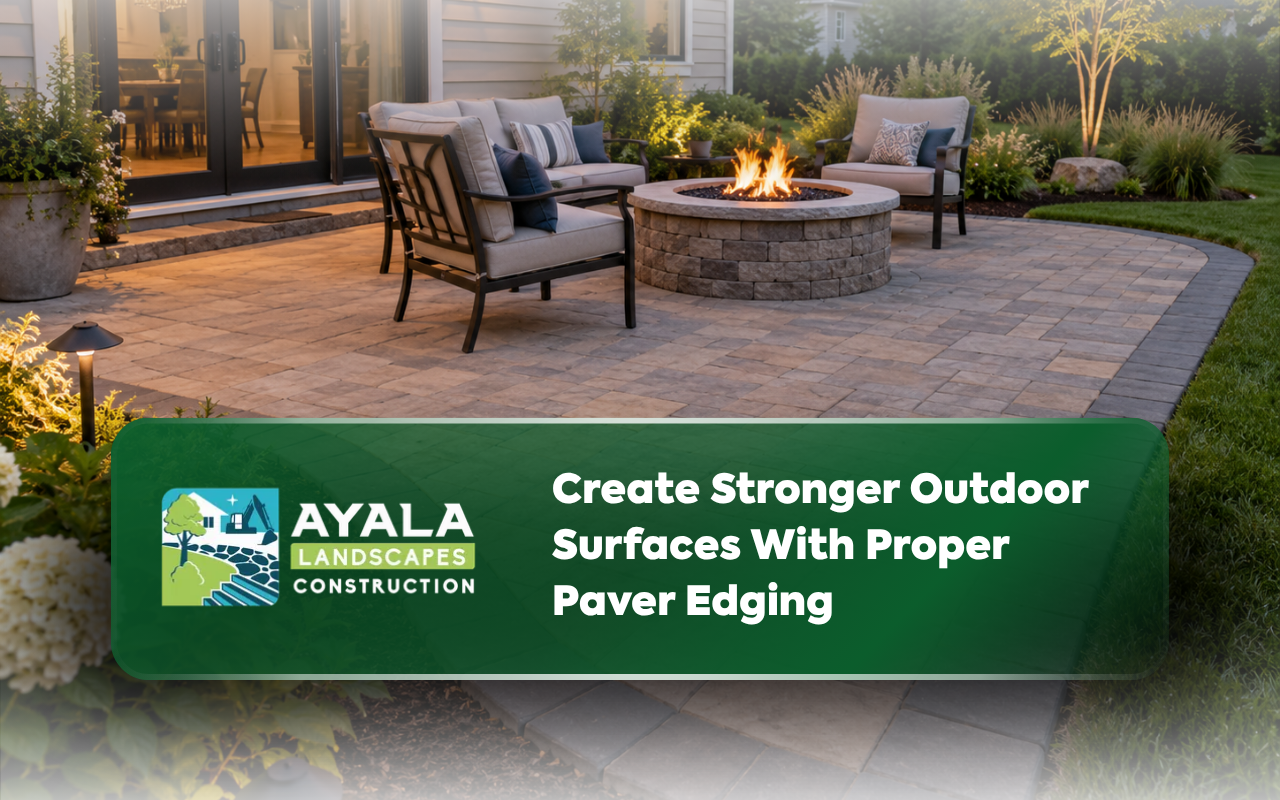
Outdoor pavers need reliable edge support to remain aligned under regular foot traffic, vehicle pressure, rain, and changing ground conditions. Paver edging helps hold the surface together while creating cleaner borders around patios, walkways, and driveways.
Without proper support, exterior pavers can gradually spread, rotate, or develop wider joints. These problems may also allow bedding and joint materials to escape. For properties in Spanaway, where rainfall can affect exposed outdoor surfaces, a suitable edging system supports durability and stability.
Ayala Landscapes Construction LLC has served local property owners since 2014. Learn more about how edging strengthens pavers before planning your next outdoor improvement.
Why Paver Edging Matters for Long-Term Surface Stability
The importance of edging begins with lateral restraint. Pavers work together as an interconnected surface, but the outer rows need support. Without a secure perimeter, movement near the edge can gradually affect surrounding pieces.
Edge restraint can be especially important near driveways, curved walkways, patio entrances, slopes, and areas exposed to frequent traffic. A suitable system helps the paved surface preserve its intended shape.
- Prevents shifting: Holds perimeter pavers in their intended position.
- Supports joint spacing: Reduces movement that can create wider gaps.
- Protects the base: Helps contain bedding and supporting materials.
- Defines borders: Creates a cleaner transition into lawns, mulch, or planting beds.
- Extends performance: Reduces preventable movement along vulnerable edges.
Is Paver Edging Necessary for Every Outdoor Project?
Homeowners frequently ask, “Is paver edging necessary?” In most installations, the perimeter needs some form of reliable restraint. However, the correct system depends on the pavers, base, traffic, layout, and surrounding construction.
Some pavers may terminate against an existing foundation, curb, step, or another fixed structure. These solid boundaries can provide restraint in specific locations. Open edges beside soil, grass, gravel, or landscaping usually require a separate support system.
Edging becomes especially important when the surface includes:
- Vehicle traffic or frequent turning movements
- Curves and detailed border patterns
- Slopes or areas affected by runoff
- Open edges beside lawns or planting beds
- Permeable systems with specialized base materials
- Heavy furniture or concentrated outdoor activity
Understanding How Paver Edging Works Below the Surface
Understanding how paver edging works requires looking below the visible surface. The restraint is positioned along the outer row of pavers and secured to an appropriately prepared base.
Once installed, the edging limits outward movement. The pavers, joint material, compacted base, and perimeter restraint then function as one connected system. If one of these components is missing or improperly installed, the surface may become less stable.
The restraint should support the sides of the pavers without creating an unnecessary visual distraction. Some systems remain concealed beneath soil, mulch, or grass. Decorative options may remain visible as part of the completed design.
Comparing Common Paver Edging Materials and Their Uses
The best material depends on the project’s shape, traffic, exposure, and design. Plastic, concrete, metal, and natural stone each provide different advantages. Selection should be based on function rather than appearance alone.
| Edging Material | Suitable Applications | Design Character | Installation Consideration |
|---|---|---|---|
| Plastic restraint | Curved patios, pathways, and lighter-use areas | Usually concealed | Requires proper fastening into a stable base |
| Concrete restraint | Driveways and high-traffic surfaces | Strong and structured | Placement must support the edge without affecting drainage |
| Metal restraint | Contemporary patios and defined walkways | Thin and modern | Material should suit outdoor moisture exposure |
| Natural stone | Garden paths and decorative patios | Organic and distinctive | Irregular pieces require careful placement |
| Border pavers | Patios, walkways, and driveway accents | Coordinated or contrasting | Decorative borders may still need structural restraint |
Property owners can explore our complete professional paver services when comparing materials, borders, repairs, and installation options.
Plastic Paver Edging Supports Flexible Curved Outdoor Designs
Plastic edging is affordable, flexible, and commonly concealed after installation. Its flexibility can make it suitable for curved garden paths, decorative patios, and outdoor areas with rounded borders.
However, the restraint must be compatible with the project and properly secured into the supporting base. Fastener spacing should follow the product requirements and site conditions rather than one universal measurement.
Concrete Paver Edging Supports High-Traffic Outdoor Areas
Concrete edging provides a strong perimeter for driveways, patios, and other areas exposed to frequent use. It may be installed as a concealed structural support or incorporated into the visible design.
The concrete should not interfere with drainage or create an unstable transition beside the pavers. Installation also needs to account for bedding depth, surface elevation, and surrounding landscaping.
Metal Paver Edging Creates Clean Modern Landscape Borders
Metal edging creates a narrow and streamlined border. It can complement contemporary patios, straight walkways, geometric layouts, and minimalist landscaping.
Aluminum and suitable steel products provide different levels of rigidity and weather resistance. Material selection should consider Spanaway’s moisture exposure, nearby soil, and the type of paved surface.
Natural Stone Edging Adds Texture and Visual Character
Natural stone edging can provide a distinctive transition between pavers, gardens, gravel, and planting beds. It works especially well in landscapes designed around organic textures and irregular shapes.
Because individual stones may differ in thickness and shape, installation requires careful placement. The stones should create a stable boundary rather than functioning only as loose decoration.
Explore Paver Edging Design Options for Outdoor Spaces
Different paver edging design options can help the paved surface coordinate with the architecture and surrounding landscape. The border may match the field pavers, introduce a contrasting color, or create a visual transition into nearby materials.
Dark border pavers can frame a light patio, while natural stone can soften the transition into a garden. A flush border creates a cleaner appearance, while a slightly raised edge may provide stronger visual separation.
Homeowners looking for ways to coordinate pavers, pathways, borders, and landscaping can review these practical front yard ideas before selecting a final design.
Following the Correct Paver Edging Installation Process
Proper paver edging installation begins after the base and perimeter have been prepared. The installer identifies the final edge, corrects loose or uneven materials, and positions the selected restraint.
- Confirm the final layout, curves, corners, and elevations.
- Expose enough of the compacted base for secure placement.
- Position the restraint tightly against the perimeter pavers.
- Fasten or anchor the system according to project requirements.
- Verify alignment before completing joint and surface compaction.
- Backfill exposed areas with suitable soil, gravel, or mulch.
Plastic or metal systems are generally secured using compatible fasteners. Concrete and stone options require a different placement approach. The installer should ensure that the completed edge supports the pavers without obstructing water movement.
Avoiding Common Paving Stone Edging Installation Mistakes
Effective paving stone edging depends on the condition of the base beneath it. Attaching a restraint to loose soil or an unstable perimeter may not prevent future movement.
Other mistakes include leaving gaps between the restraint and pavers, using an unsuitable material, placing too few fasteners, or backfilling before verifying alignment.
Recognizing Signs Your Existing Paver Edging Needs Attention
Problems near the perimeter often provide early evidence of insufficient or damaged restraint. Correcting these concerns promptly may prevent the movement from spreading farther into the paved area.
- Outer pavers beginning to rotate or separate
- Joint gaps becoming wider near the perimeter
- Base or bedding material washing into nearby soil
- Visible edging pulling away from the pavers
- Loose border stones beside high-traffic areas
- Low sections collecting water near the edge
Ayala Landscapes Construction LLC can evaluate the edging, supporting base, drainage, and surrounding surface before recommending repairs or replacement.
Frequently Asked Questions About Paver Edge Restraints
Can pavers remain stable without an edging system?
Open perimeter areas generally need reliable restraint. Existing curbs, foundations, or other fixed structures may provide support in some locations, but exposed edges often require a separate system.
Should decorative border pavers replace structural edging?
Not necessarily. Border pavers can improve appearance, but they may still need structural restraint. The correct approach depends on the base, layout, traffic, and border installation method.
Which edging material works best for curved patios?
Flexible plastic or certain metal systems may accommodate curves effectively. Natural stone can also create curved decorative borders, although installation may require more detailed placement.
Why are the pavers separating near the edge?
Separation may result from damaged restraint, insufficient fastening, base erosion, poor compaction, or drainage problems. The complete perimeter should be evaluated before repairs begin.
Can damaged paver edging be repaired or replaced?
Many systems can be repaired or replaced without rebuilding the entire paved area. However, shifted pavers and damaged base materials may also require correction during the project.
Protect and Style Your Spanaway Paver Project
A reliable perimeter helps create a durable and visually finished outdoor surface. Whether you choose plastic, concrete, metal, stone, or a coordinated border, proper installation helps keep the pavers aligned.
At Ayala Landscapes Construction LLC, we provide licensed, insured, and BBB-certified service backed by experience dating to 2014. Our team can help Spanaway property owners select edging suited to their layout and outdoor use.
Ready to improve an existing surface or plan a new paver project? request your project consultation from Ayala Landscapes Construction LLC.