
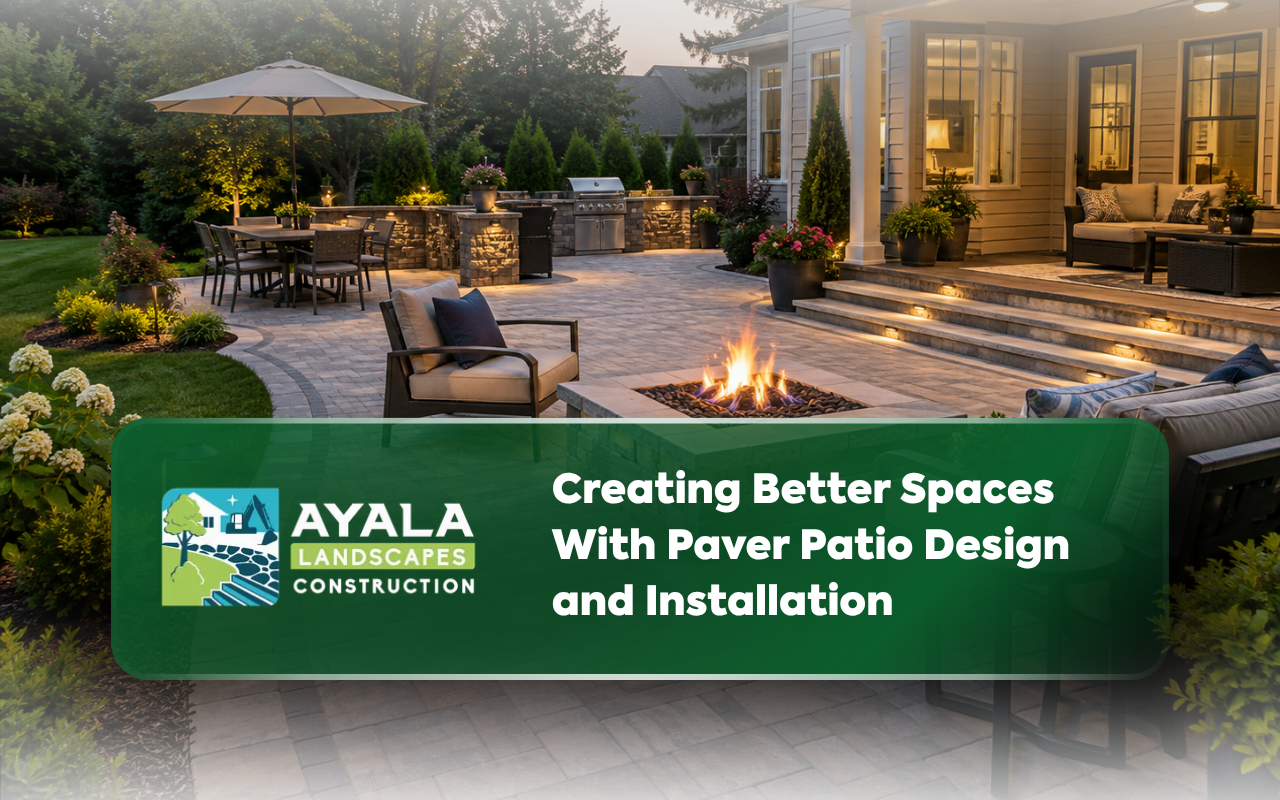
A patio works best when every part of the layout has a purpose. Effective paver patio design and installation should connect seating, walkways, drainage, furniture, and surrounding landscape features into one usable plan. Request your patio consultation when you want to improve an empty yard or replace an outdoor area that no longer works well.
At Ayala Landscapes Construction LLC, we focus on outdoor layouts that combine practical circulation with paver choices that fit the property.
Good Paver Patio Design Starts With Clear Zones
Dining, lounging, grilling, and walking areas should not compete for the same space. Defining each zone early helps determine the right patio shape and avoids furniture blocking important routes.
Furniture Placement Should Guide The Final Patio Footprint
Measure tables, chairs, grills, and lounge furniture before finalizing dimensions. Add enough clearance for people to move comfortably around each zone without stepping into planting beds or narrow edges.
How To Plan A Paver Patio Layout Properly
Schedule your patio estimate before excavation if you are uncertain about size, grade, or how the patio should connect with the home. Early planning helps prevent expensive layout changes later.
- Measure the usable outdoor area.
- Identify doors and primary walking routes.
- Place furniture and activity zones.
- Confirm drainage direction and elevation changes.
- Select pavers after the layout works.
Paver Patio Design Ideas Should Support Real Movement
Pattern changes, borders, and color bands can visually separate zones without adding walls. For example, a contrasting border can define a dining area while a linear pattern can pull attention toward a garden or fire feature.
For professional options, visit our explore professional paver services page.
Drainage And Grade Should Shape The Final Design
Patio beauty does not matter if water collects against the home or settles between pavers. Proper grade, base preparation, and runoff planning should be integrated into the design from the beginning.
Material Scale Changes How Large The Patio Feels
Large-format pavers can create a clean visual field, while smaller units may support more detailed patterns. The best choice depends on patio size, architectural style, and the amount of visual activity already present in the yard.
Use These Design Checks Before Finalizing Paver Materials
- Does the pattern fit the patio shape?
- Will borders crowd the usable area?
- Do colors coordinate with the home?
- Can replacement pavers be sourced later?
Installation Quality Matters As Much As Design Choices
Even a strong layout can perform poorly if excavation, base compaction, bedding, edge restraint, or final compaction is weak. Installation details determine whether the patio remains stable and drains correctly.
For patio-specific options, review our explore custom patio pavers page.
Common Layout Mistakes Can Make Patios Feel Smaller
- Using oversized furniture in narrow spaces
- Creating dead-end walking paths
- Placing grills too close to seating
- Ignoring door swing and stair access
Step-By-Step Installation Should Follow The Approved Patio Layout
Once the plan is set, excavation, base preparation, bedding, paver placement, cutting, edge restraint, joint material, and compaction should follow in sequence.
For a deeper construction overview, read our learn how patios install article.
Paver Patio Companies Should Explain Design Tradeoffs Clearly
A professional installer should explain how pattern, material, drainage, and size affect cost and maintenance. That helps homeowners make informed choices instead of selecting finishes without understanding the practical impact.
Our team at Ayala Landscapes Construction LLC can help connect design priorities with installation requirements.
Final Layout Reviews Help Prevent Costly Construction Changes
Before excavation begins, review the approved dimensions, furniture zones, walkways, border locations, and drainage direction one more time. Small changes are easier to make on the plan than after the base has already been prepared.
Transitions Between Spaces Need Careful Design And Elevation
Where the patio meets doors, steps, lawn, walkways, or existing concrete can determine whether the finished area feels polished or improvised. Elevation changes should be planned before base work begins so transitions remain comfortable and drainage continues moving in the intended direction.
Consistent transitions also help reduce trip points and make furniture movement easier between outdoor zones.
Future Maintenance Should Influence Material Selection Decisions Early
Some homeowners prefer uniform colors and simple patterns because they are easier to repair or expand later. Others prioritize distinctive textures or contrasting borders. Neither approach is automatically better, but the maintenance plan should be considered before materials are ordered.
It is also useful to keep records of the selected paver line, color, size, and pattern. That information can make future replacements or additions easier to coordinate.
Homeowners should also consider how the patio will look from inside the house. Views through kitchen, dining, or living room windows can influence the best location for seating zones, decorative borders, and focal points. A layout that works from multiple viewpoints often feels more connected to the home.
Frequently Ask Questions
How should I start planning a paver patio?
Begin with furniture, traffic flow, drainage, and intended use before selecting colors or patterns.
Do paver patterns affect patio size visually?
Yes. Pattern direction and scale can make an area feel wider, longer, or more detailed.
Should drainage be planned before design?
Yes. Grade and runoff should influence the layout before materials are finalized.
Can one patio include multiple zones?
Yes. Borders, pattern changes, and furniture placement can define separate functional areas.
Why does base preparation matter?
A stable compacted base supports long-term alignment, drainage, and resistance to settlement.
Create A Patio Layout That Works Every Day
Strong paver patio design and installation should make the yard easier to use while supporting drainage, durability, and visual balance. Book your patio consultation with Ayala Landscapes Construction LLC when you are ready to plan the next step.