
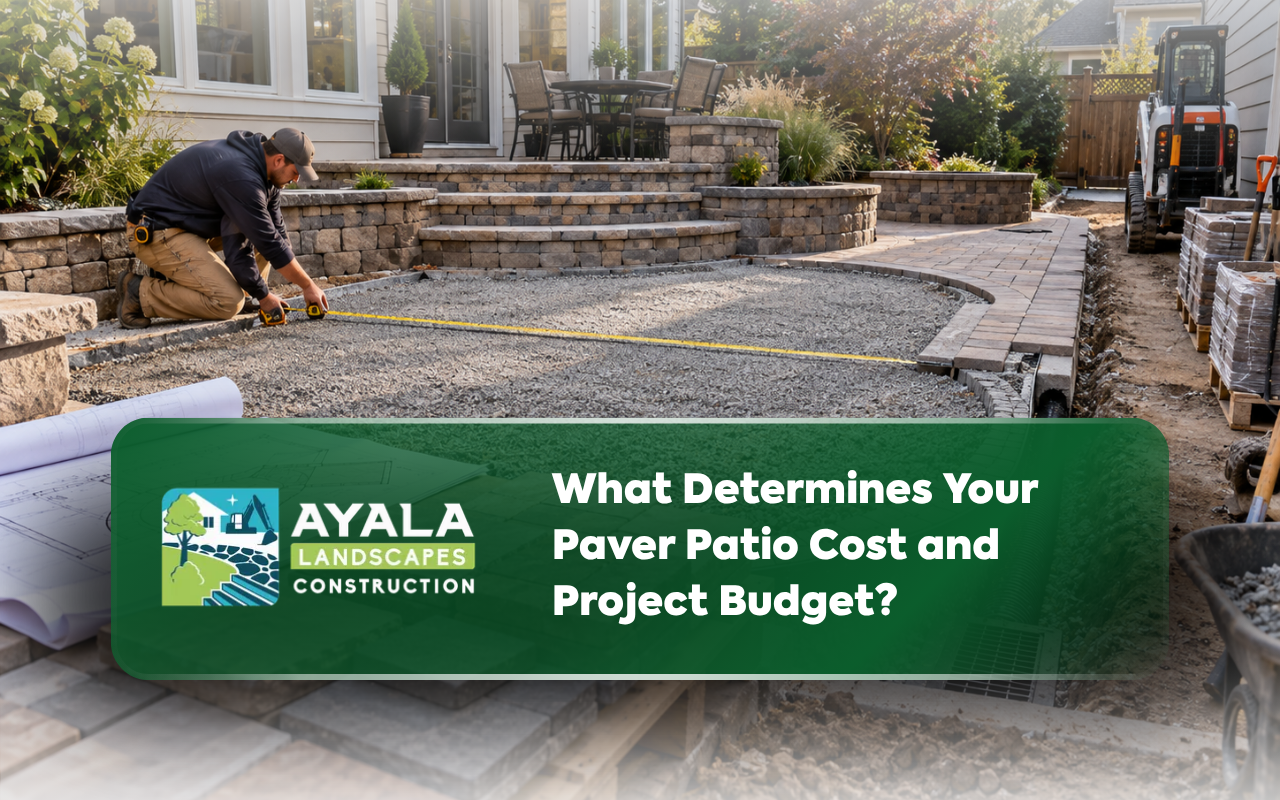
Paver patio cost depends on the patio’s size, selected material, site preparation, layout complexity, labor, access, drainage, and additional features. A level rectangular patio using standard concrete pavers generally requires fewer resources than a curved natural-stone patio with steps, borders, or extensive grading.
Because every property presents different conditions, a reliable budget should account for the complete installation, not only the visible pavers. This guide explains the main pricing variables and helps residential and commercial property owners prepare for a more useful professional paver patio estimate.
Understand the Main Paver Patio Cost Factors
The most important paver patio cost factors involve material quantities, preparation requirements, and installation time. Two patios with the same dimensions may have different costs if one property requires excavation, drainage corrections, or restricted-access work.
The following elements should be included when planning a project budget:
Primary Budget Factors
- Patio dimensions and total square footage
- Concrete, brick, or natural stone material
- Existing soil and ground stability
- Excavation, grading, and debris removal
- Base materials and compaction requirements
- Pattern, borders, curves, and material cuts
- Steps, seating walls, or other added features
- Access for workers, materials, and equipment
Use This Table to Compare Patio Budget Scenarios
Without verified local pricing, comparing lower- and higher-complexity scenarios provides more value than publishing a generic price range. This table shows how common decisions can move a project toward a simpler or more involved installation.
Paver Patio Cost Planning Table
| Project Factor | Lower-Cost Scenario | Higher-Cost Scenario | Why It Matters |
|---|---|---|---|
| Paver material | Standard concrete | Premium stone or specialty pavers | Material and handling requirements differ |
| Patio layout | Simple rectangle | Curves or custom patterns | Detailed layouts require more cuts and labor |
| Ground condition | Level and stable | Excavation or grading required | Preparation changes equipment and labor needs |
| Drainage needs | Existing slope works well | Drainage correction needed | Water control can affect base and grading work |
| Additional features | Basic patio surface | Steps, borders, seating, or fire feature | Features require additional materials and planning |
| Property access | Direct equipment access | Narrow or restricted access | Material movement may require more labor |
Key Takeaway
The cost to build paver patio surfaces depends on the full project scope, not only the square footage or paver material.
Patio Size Changes Material and Labor Requirements
Square footage directly influences the quantity of pavers, aggregate, bedding material, joint sand, and edge restraint needed. Larger patios also involve additional excavation, compaction, cutting, and installation time.
However, size alone does not determine the final price. A small patio with curves, tight access, and a detailed pattern may require more labor per square foot than a larger rectangular patio with straightforward equipment access.
Paver Materials Create Different Cost Levels
Concrete pavers commonly provide broad style options at a practical cost level. Brick creates a classic appearance, while natural stone offers distinctive color and surface variation. Specialty products, uncommon dimensions, and custom finishes may increase material and handling requirements.
Material selection should also consider maintenance, surface texture, exposure, and patio use. Explore available patio paver material options before selecting a product based only on purchase price.
Site Preparation Can Change the Cost to Build Patio Paver Surfaces
Site preparation is frequently underestimated when calculating the cost to build patio paver projects. Existing grass, old concrete, roots, rocks, and construction debris may need removal before the base can be installed.
Soft soil or recently disturbed ground may require additional excavation and stabilization. A steep or uneven area may also need grading to create a usable patio elevation and move water away from nearby structures.
Preparation Items That May Affect Cost
- Removal of old concrete, grass, or damaged pavers
- Excavation for the planned base depth
- Compaction for unstable or disturbed soil
- Grading to improve patio elevation
- Drainage correction before installation
- Disposal of removed material
Drainage Requirements May Add Necessary Project Work
Drainage should be evaluated before patio construction begins. Water collecting near foundations or across the planned surface may require grading adjustments, drainage components, or changes to the patio elevation.
These improvements can increase the initial project scope. However, leaving known water problems unresolved may contribute to settlement, joint erosion, or standing water. A lower quote that excludes necessary drainage work may create greater expenses later.
Key Takeaway
A realistic paver patio estimate should include drainage and grading needs when the site requires them.
Simple Patio Layouts Usually Require Less Labor
A rectangular layout using a straightforward pattern typically requires fewer cuts and layout adjustments. Curved borders, circular designs, multiple paver sizes, and intricate patterns require additional planning and installation time.
Pattern complexity may also affect material waste. More cuts can increase the quantity of pavers required. Property owners working within a specific budget can often preserve visual interest by using a simple field pattern with one contrasting border.
Optional Features Increase Materials and Construction Complexity
Steps, raised sections, borders, seating walls, lighting preparation, and fire features can make a patio more functional. However, each addition changes the design, materials, and installation process.
Consider prioritizing features according to how the space will actually be used. A large decorative border may be less valuable than comfortable circulation, sufficient seating space, or a properly placed transition to the building.
Property Access Affects Equipment and Material Handling
Direct access allows equipment and materials to reach the installation area more efficiently. Narrow gates, steep slopes, fences, established landscaping, and limited staging space may require more manual material handling.
Access should be reviewed during the estimate rather than after work begins. The contractor should also identify areas that need protection and explain how removed soil or old paving will leave the property.
Professional and DIY Projects Carry Different Cost Risks
DIY work may appear to reduce labor expenses, but it requires excavation, compaction equipment, cutting tools, material transport, and adequate project time. Correcting an uneven base or drainage mistake can add unplanned costs.
Professional residential and commercial paver installation includes experience with preparation, grading, patterns, edge restraints, and transitions. Compare the complete project scope rather than labor cost alone.
Watch for Patio Quotes Missing Essential Preparation
An unusually low estimate may exclude work necessary for a stable installation. Before accepting a proposal, confirm what is included and which conditions could change the stated price.
Estimate Details to Confirm
- Excavation depth and removal of existing materials
- Type and quantity of planned base material
- Compaction and grading requirements
- Drainage corrections or additional components
- Edge restraints, borders, and paver cuts
- Cleanup and disposal after installation
If these items are unclear, request a more detailed explanation. A useful estimate should help you understand the planned construction, not only provide a final number.
Compare Paver Patio Estimates Using the Complete Scope
When requesting a paver patio estimate, provide the approximate dimensions, intended use, preferred material, desired features, and known drainage concerns. This information helps the contractor understand your goals before evaluating the site.
Before Comparing Estimates, Ask
- Which preparation work is included?
- What specific paver material and pattern are planned?
- How will drainage, grading, and patio elevation be handled?
- Are borders, steps, or additional features included?
- Who handles cleanup and disposal after installation?
Frequently Asked Questions
What affects paver patio cost the most?
The main factors include patio size, paver material, site preparation, drainage, labor, layout complexity, access, and added features.
Why does the cost to build paver patio surfaces vary?
Costs vary because each property has different soil, access, grading, drainage, material, and layout requirements.
Is a simple patio layout usually more affordable?
A simple rectangular layout often requires fewer cuts, less layout time, and less material waste than curved or highly detailed patterns.
What should a paver patio estimate include?
A useful estimate should explain materials, preparation, excavation, base work, drainage, edge restraints, pattern details, cleanup, and disposal.
Can drainage problems affect patio cost?
Yes. Drainage corrections can increase the project scope, but ignoring water issues may lead to settlement, standing water, or later repairs.
Build a Patio That Fits Your Complete Budget
Your paver patio cost should reflect the complete project: materials, ground preparation, drainage, labor, access, layout, and selected features. Considering these elements together creates a more realistic budget and helps prevent important work from being overlooked.
At Ayala Landscapes Construction LLC, we plan and install residential and commercial paver projects backed by experience serving the area since 2014. Our BBB team can evaluate existing site conditions and explain the factors affecting your project.
We provide free estimates for property owners ready to compare options. To discuss your patio dimensions, materials, and installation needs, request your free estimate today.