
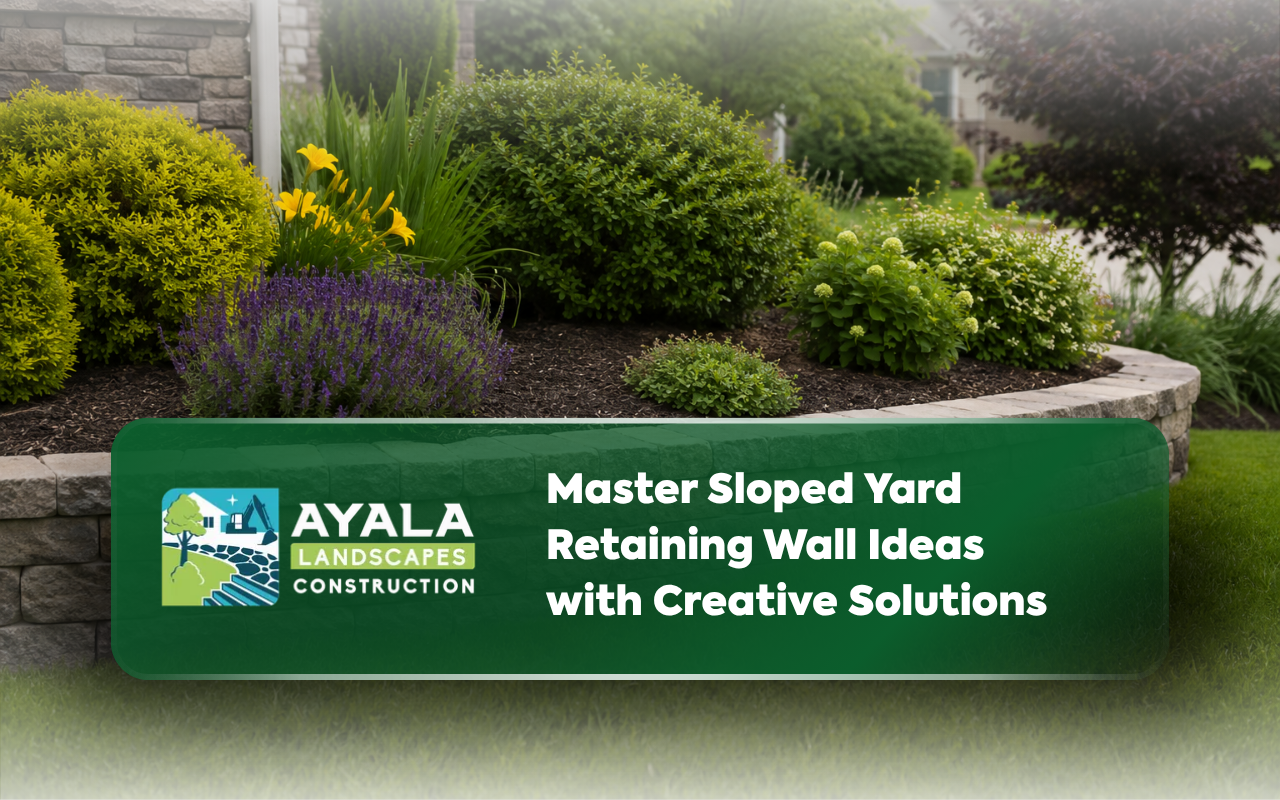
A sloped yard retaining wall can turn a difficult landscape into a safer and more useful outdoor area. It can hold soil in place, guide water, reduce erosion, and create level spaces for planting, seating, or simple yard use.
At Ayala Landscapes Construction LLC, we help homeowners understand practical ways to manage uneven ground. Our approach connects wall design with drainage, soil conditions, and the way you want to use your yard. Explore our sloped backyard retaining wall solutions for more ideas.
How Can a Retaining Wall Solve Slope Problems?
A retaining wall for sloped yard areas supports soil that may otherwise move downhill during heavy rain or normal ground changes. The wall creates a firm break in the slope, which can reduce loose soil, control runoff, and make the yard easier to manage.
The right wall can also create level sections on an uneven property. These sections may become garden beds, pathways, small gathering areas, or open spaces for everyday use. The goal is not only to hold soil but also to improve how the landscape works.
Choosing the Right Wall for Your Slope
Different slopes need different wall systems. With Ayala Landscapes Construction LLC, you receive guidance based on the wall height, available space, soil pressure, drainage needs, and the location of nearby structures. A careful plan helps the wall fit both the land and the intended use.
- Gravity walls use their own weight to hold back soil and often work well for lower walls.
- Modular block walls create a clean appearance and can follow curves or stepped layouts.
- Reinforced walls may be needed where the slope places greater pressure on the structure.
- Terraced walls divide a steep area into smaller, more manageable levels.
Our hardscaping and retaining wall services can help you compare options for your property.
Materials That Balance Strength and Yard Style
Wall materials affect appearance, maintenance, and how the structure fits the landscape. Concrete blocks offer a neat and consistent finish. Natural stone creates a softer look that can blend with plants and garden areas. Each material must also support the planned height and soil load.
A backyard slope wall should match nearby patios, paths, steps, and planting areas. Color, texture, and wall shape can make the structure feel like part of the yard instead of a separate feature. Material selection should always follow structural needs before decorative goals.
Drainage and Soil Pressure Need Careful Planning
Water is one of the most important parts of retaining wall planning. Rainwater can collect behind a wall and increase pressure against it. Gravel backfill, drain pipes, proper grading, and suitable outlets can help move water away from the structure.
Our team at Ayala Landscapes Construction LLC considers how water moves across the property before planning the wall. Soil type also matters because clay, sand, and mixed soils react differently to moisture. Review our retaining wall planning and construction information for related guidance.
Creating Safer, More Usable Outdoor Areas
A yard leveling wall can create space where the original slope limited movement or outdoor use. Instead of one steep surface, the yard may have separate levels connected by steps, paths, or planted sections. This layout can make routine care and access more practical.
- Create a level planting area for flowers, shrubs, herbs, or vegetables.
- Add a stable path that connects the home with lower parts of the yard.
- Form a level section for seating, outdoor meals, or quiet relaxation.
- Use several short walls to create terraces on a steeper hillside.
Plants can soften wall edges and add color, but their roots and mature size should be considered. Small shrubs, ground cover, and controlled planting areas often work better than plants that may place pressure on the wall.
Maintenance Signs Homeowners Should Watch
A well-planned hillside retaining wall still benefits from regular checks. Small changes may show that drainage, soil, or nearby landscaping needs attention. Finding these signs early can make it easier to understand the cause and decide on the next step.
- Soil washing away near the top, ends, or base of the wall
- Water collecting behind the wall or around nearby yard areas
- New cracks, loose blocks, gaps, or visible movement
- A wall surface that appears to lean or bulge outward
- Blocked drains, outlets, or openings that should release water
Keep leaves, soil, and plant growth away from drainage openings. Also watch how roof runoff and yard drains affect the area during wet weather. Changes in water flow can place new pressure on a wall that previously appeared stable.
Frequently Asked Questions
Does every sloped yard need a retaining wall?
No. A gentle slope may be managed with grading, planting, or another erosion-control method. A wall may be more useful when soil movement, limited yard access, or the need for level space creates a clear problem. Our retaining wall and hardscaping options explain several possible approaches.
Can one wall level an entire backyard?
It depends on the slope height, yard size, soil, and available space. Some properties may work with one wall, while steeper yards may need several shorter terraces. A site review can help determine which layout offers practical support without making the design feel too large.
Why is drainage important behind the wall?
Water adds pressure to the soil behind a wall. Without a clear drainage path, that pressure may affect wall stability. Gravel, drain pipe, grading, and outlets can work together to direct water away. See our retaining wall drainage and planning page for more context.
Can a retaining wall include steps or seating?
Yes, these features can be part of the design when there is enough room and the structure is planned for them. Steps can improve access between levels, while wider wall sections may support nearby seating areas. These details should be included early so the layout remains practical.
When should homeowners request professional guidance?
Professional guidance is useful when the wall is tall, the slope is steep, drainage is difficult, or nearby structures may be affected. When you choose Ayala Landscapes Construction LLC, we review the yard conditions and intended use. You can request a retaining wall consultation to discuss the property.
Plan a Stable Yard in Spanaway, WA
A sloped yard retaining wall can reduce erosion concerns while creating outdoor areas that feel more stable and useful. The best results come from combining the right wall type, suitable materials, careful drainage, and a layout that matches how your family uses the property.
At Ayala Landscapes Construction LLC, we focus on practical solutions for challenging landscapes in Spanaway, WA. Share your slope concerns, drainage issues, and ideas for the space through our contact page for sloped yard projects.