
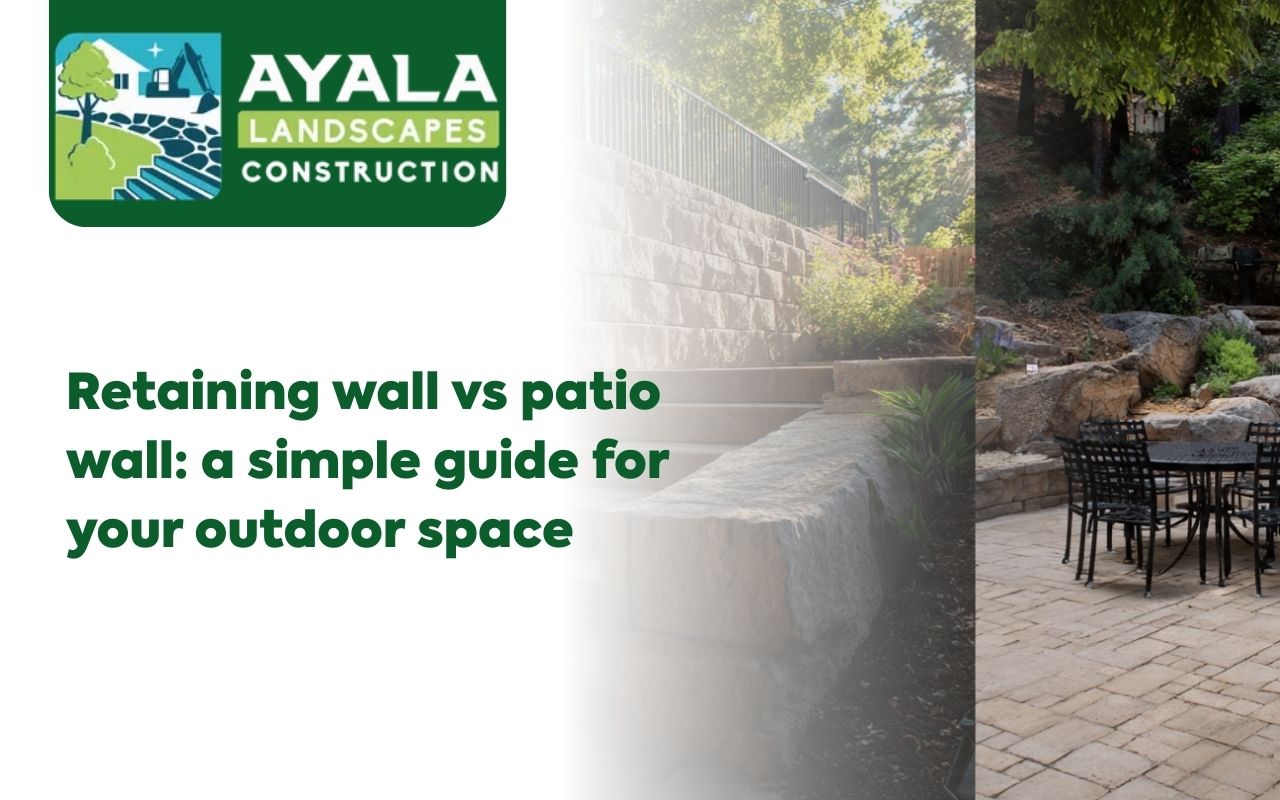
Retaining wall vs patio wall choices can feel tricky at first. However, both options can shape your yard in smart ways. Ayala Landscapes Construction LLC often helps homeowners compare strength, style, and comfort.
Therefore, it helps to know what each wall does best. For example, one can hold soil in place. Meanwhile, the other can add seating and a clean edge. This guide explains key differences, so your plan fits your space.
Purpose of Retaining Walls vs. Patio Walls
When you compare Retaining wall vs patio wall uses, the purpose matters most. A retaining wall holds soil on a slope. It also helps reduce washouts after heavy rain. In contrast, a patio wall frames a living area.
In addition, a patio wall can create a cozy spot to sit. It often works well near a fire feature. To see the difference fast, consider these points:
- A retaining wall can be Load-bearing in sloped yards.
- A patio wall can act as a seat wall for guests.
- Both can define space, although they solve different problems.
Retaining Wall Design Basics
First, check the height and the slope you need to manage. Taller walls need extra support in the back. Also, drainage planning matters, because trapped water can push on the wall.
Next, plan the footing depth so the base stays firm over time. A compact gravel base helps, too. Moreover, local rules may apply for taller builds, so check your area before you start.
Patio Wall Design Basics
Start by deciding what the wall should do in daily use. For example, a low wall can guide foot traffic. Also, a sitting-height wall can add comfort without taking more patio space.
Then, match the wall shape to your layout. Curves feel soft and natural, while straight lines feel modern. Finally, use a stable base so sections stay level through the seasons.
Best Materials for Retaining Walls
Material choice affects strength, look, and upkeep. Therefore, pick a material that fits your soil and your style. Ayala Landscapes Construction LLC often recommends options that balance durability and design.
- Concrete blocks: strong, neat, and easy to stack.
- Natural stone: timeless look, although it needs careful fitting.
- Timber: warm style, but it may need more upkeep over time.
- Wire rock baskets: great drainage, yet the look is bold.
Best Materials for Patio Walls
Patio walls focus more on comfort and curb appeal. Also, they should match your patio surface for a clean look. In addition, smooth cap stones make sitting safer and more pleasant.
- Brick and pavers: easy to match with patios and walkways.
- Stone veneer: classic style with less bulk than full stone.
- Concrete blocks with a finish: flexible and budget friendly.
- Accent tile: adds color, although it works best in small areas.
Drainage for Retaining Walls
Water control is vital behind a retaining wall. Otherwise, water pressure can build and cause cracking. So, use a drain pipe at the base and add clean gravel behind the wall.
Also, add small exit holes so water can escape. A filter fabric wrap helps keep soil from clogging the gravel. As a result, the wall stays stable through wet seasons.
Drainage for Patio Walls
Patio walls need simple drainage, too. For example, slope the patio surface slightly away from the wall. Also, use a gravel layer under the base so water can pass through.
In wetter areas, a small gravel trench can help. Moreover, a solid cap can shed water off the top edge. Therefore, the wall stays cleaner and lasts longer.
Cost Comparison: Retaining Walls vs. Patio Walls
Retaining wall vs patio wall budgets can differ a lot. Retaining walls often need more digging and drainage parts. Also, taller walls may need extra planning and local approval.
- Retaining walls: more base work, more water control, and more support needs.
- Patio walls: less digging, faster install, and fewer hidden parts.
- Materials vary, so the finish you choose can shift the total cost.
For planning help, explore hardscaping and sod services to see related outdoor builds.
Maintenance Tips for Both Wall Types
Regular checks protect your investment. After storms, look for leaning, gaps, or washed-out gravel. Also, clear drain exits so water keeps moving. Ayala Landscapes Construction LLC suggests quick seasonal checkups.
- Remove leaves and soil buildup near the base.
- Rinse dirt and algae with gentle cleaning methods.
- Fix small loose blocks early, so damage does not spread.
Frequently Asked Questions
How do I know if I need a retaining wall?
If your yard has a slope and soil moves after rain, a retaining wall may help. It can also create level planting areas.
Can a patio wall be used for seating?
Yes. Many patio walls are built at sitting height. Also, a smooth cap makes it more comfortable.
Do both walls need drainage?
Yes, although the needs differ. Retaining walls need strong drainage behind them. Patio walls mainly need surface water to flow away.
Which wall is faster to build?
Patio walls are usually faster, because they are lower and need less digging. However, site access can change timing.
Who can help me choose the right wall?
Ayala Landscapes Construction LLC can review your slope, soil, and layout. Then, they can suggest a plan that fits your yard goals.
Choosing the Right Wall for Your Outdoor Space
Retaining wall vs patio wall decisions should match your site needs. If you must hold back soil, choose a retaining wall with solid water control. If you want comfort and style, choose a patio wall to frame the space.
Moreover, the best result comes from clear planning and skilled work. If you want a site review and a practical layout plan, contact Ayala Landscapes Construction LLC through the contact page.