
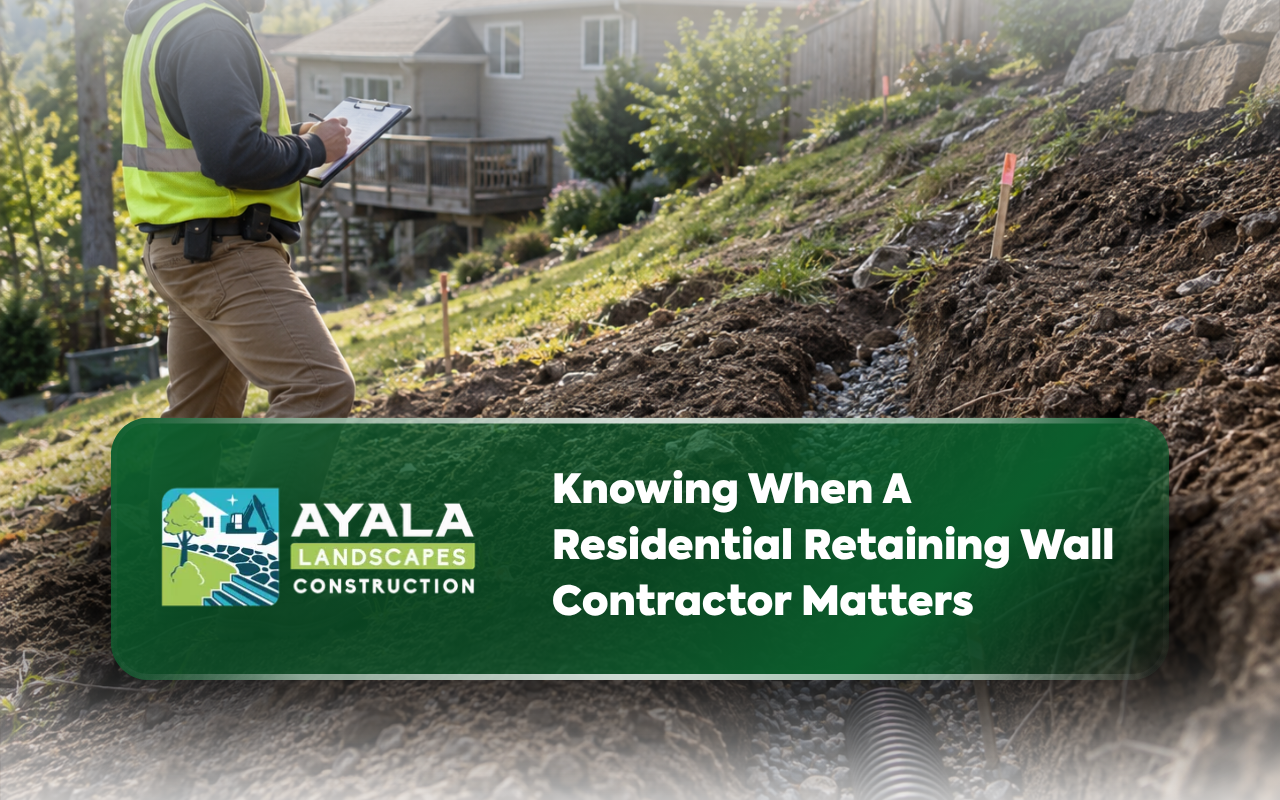
Sloped yards, erosion, drainage pressure, and shifting soil can turn a small landscape problem into a larger structural concern. A qualified residential retaining wall contractor can evaluate how grade, water, soil, and wall height affect the project before construction begins. Request your retaining consultation when you need professional guidance for a new wall or an existing problem area.
At Ayala Landscapes Construction LLC, we approach retaining wall work by connecting structure, drainage, and landscape conditions instead of treating the wall as a decorative feature alone.
Warning Signs Can Reveal When Professional Help Matters
- Soil is washing away after heavy rain.
- An existing wall is leaning or bulging.
- Water collects behind or above the wall.
- Cracks or separated blocks are getting worse.
These signs do not all mean the wall is failing, but they are good reasons to inspect the area before adding more weight or landscaping nearby.
Residential Retaining Wall Planning Starts With Water Movement
Retaining walls resist soil pressure, but water pressure can increase that load significantly. Drainage stone, outlets, grading, and backfill should be planned together so water has a controlled path away from the wall.
Wall Height Changes Structural And Drainage Requirements Quickly
Schedule your wall estimate when the wall will hold back a significant slope, support nearby improvements, or replace a visibly distressed structure. Taller walls often require more detailed planning and may involve additional local requirements.
For service details, visit our explore retaining wall services page.
Material Choice Should Match Function Before Appearance Decisions
| Material | Best Use | Drainage Need | Maintenance | Planning Question |
|---|---|---|---|---|
| Segmental block | Residential slopes | Back drainage | Low to moderate | Is reinforcement required? |
| Natural stone | Decorative landscapes | Design dependent | Moderate | Is irregular placement acceptable? |
| Concrete | Structural applications | Still critical | Low | What finish is desired? |
| Timber | Smaller walls | Moisture sensitive | Higher | What lifespan is expected? |
Soil Conditions Influence How Retaining Walls Perform Long-Term
Clay-heavy soil, loose fill, saturated ground, and steep slopes can behave differently under load. A good plan considers what the wall is retaining and how the soil is likely to respond through wet and dry seasons.
Nearby Improvements Can Increase Pressure On Retaining Walls
Driveways, patios, sheds, fences, and heavy landscaping can add loads near the wall. Those features should be considered before deciding on wall type, reinforcement, or setback.
For local wall options, visit our explore Spanaway retaining walls page.
Ask These Questions Before Choosing Your Retaining Contractor
- How will drainage be handled behind the wall?
- What base preparation does the site need?
- Does the design require reinforcement?
- How will nearby loads affect the wall?
- What maintenance should I expect later?
Existing Wall Problems Need Diagnosis Before Replacement Begins
A leaning or cracked wall should not automatically be rebuilt the same way. The original problem may involve poor drainage, weak base preparation, excessive load, or soil movement.
For another local service area, review our explore Puyallup retaining walls page.
Retaining Wall Contractors Should Explain The Full System
- Base depth and compaction approach
- Drainage stone and outlet strategy
- Wall material and reinforcement method
- Final grading around the structure
Nearby Contractor Searches Should Include Site Evaluation First
Searching for a contractor near your home is useful, but proximity should not replace careful planning. The best next step is a site review that looks at slope, water, soil, access, and surrounding improvements together.
Our team at Ayala Landscapes Construction LLC can help identify which conditions matter before recommending the wall approach.
Maintenance Planning Helps Protect Retaining Walls After Installation
After construction, homeowners should watch for blocked drainage outlets, new erosion, settlement near the wall, or water collecting where it did not before. Early attention can help prevent small drainage problems from becoming larger structural concerns.
Drainage Outlets Need Clear Paths After Installation Too
Even a well-built wall can develop problems if drainage outlets become buried, blocked, or redirected by future landscaping. Homeowners should know where water is supposed to leave the wall system and keep those areas open.
Changes uphill can matter as well. New patios, downspouts, irrigation, or grading can send more water toward the wall than the original design expected. Reviewing those changes early can protect the wall from unnecessary pressure.
Permitting And Local Requirements Should Be Checked Early
Wall height, location, slope conditions, and nearby structures can affect whether local review or permitting is required. Those rules vary by jurisdiction, so they should be confirmed before construction begins rather than assumed from another project.
Early confirmation also helps clarify setbacks, engineering needs, and inspection steps that may influence the final design or schedule.
Seasonal inspections are especially useful after periods of heavy rain. New erosion channels, displaced soil, or persistent wet areas can show that runoff patterns have changed. Addressing those conditions early can help protect both the wall and nearby landscape features.
Plan carefully.
Frequently Ask Questions
When should I hire a retaining wall contractor?
Hire one when erosion, slope pressure, drainage, wall movement, or structural height makes the project more complex.
Why is drainage so important?
Water buildup behind a wall increases pressure and can contribute to movement or failure.
Can an existing leaning wall be repaired?
Sometimes, but the cause should be identified before deciding between repair and replacement.
Does wall material affect durability?
Yes. Material, installation quality, drainage, and soil conditions all affect long-term performance.
Should nearby patios affect wall planning?
Yes. Added loads and drainage from nearby hardscape can influence the design.
Choose A Wall Plan That Addresses The Cause
A reliable residential retaining wall contractor should connect drainage, soil, load, material, and structure before construction begins. Book your retaining consultation with Ayala Landscapes Construction LLC to discuss the site and next steps.