
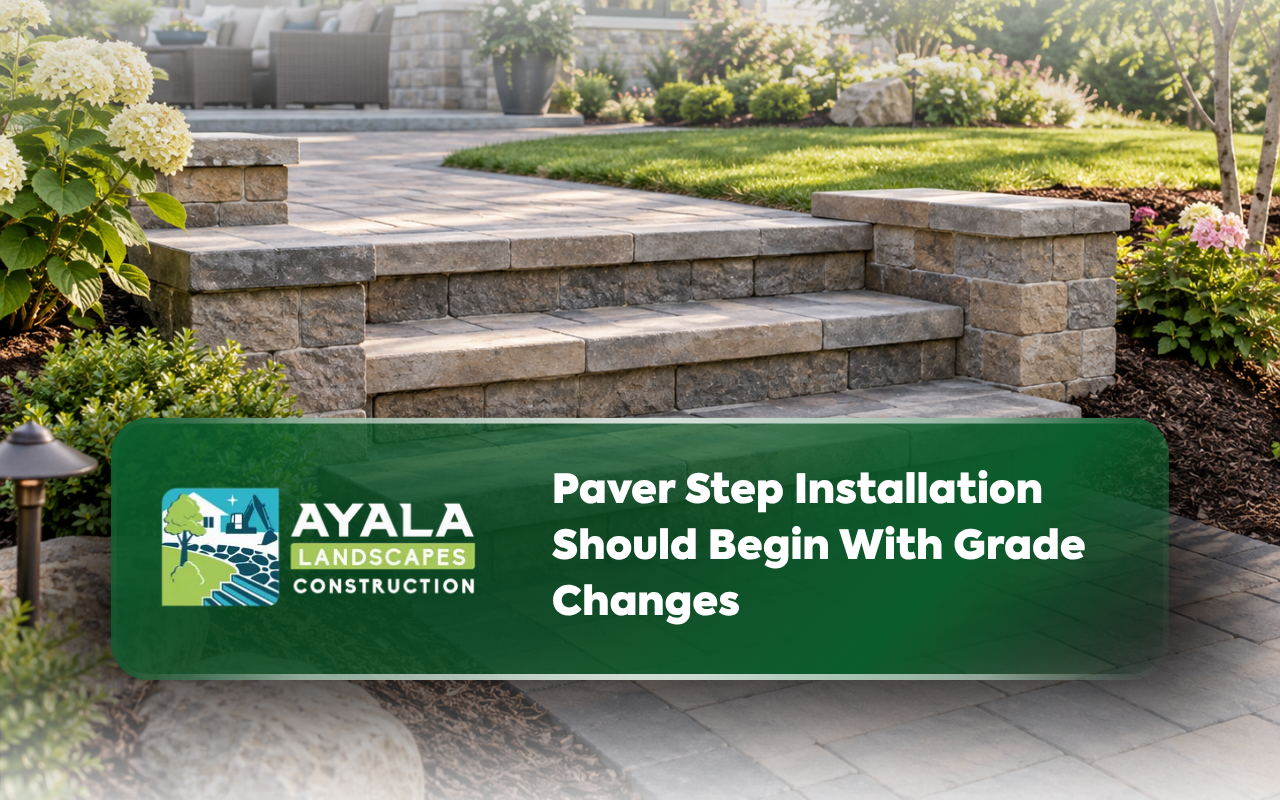
Outdoor steps should solve an elevation problem first and create a design feature second. Good paver step installation begins with slope, rise, run, drainage, landing space, and where people naturally move through the yard. At Ayala Landscapes Construction LLC, we plan steps around safe transitions and practical circulation before decorative details.
Where Paver Steps Work Best Depends On Movement
Steps work well between patios, walkways, entrances, garden levels, and sloped yard sections where a smooth grade transition is not practical. They should not be added simply because elevation changes exist.
The location should follow the route people already want to take.
Paver Step Design Ideas Should Start With Dimensions
Comfortable steps depend on consistent rise and tread depth. Irregular dimensions can make a short stair feel awkward or create trip hazards.
Material shape and border patterns should be selected after the basic geometry is resolved.
Free Estimates Help Compare Step Layouts Before Building
Free estimates allow property owners to compare number of steps, landing size, excavation, drainage, and material options before construction starts. That is especially useful on slopes where small grade changes can alter the entire layout.
For broader options, visit our explore professional paver services page.
These Site Conditions Change Step Installation Planning Significantly
- Steep or uneven slopes
- Drainage crossing the stair path
- Tree roots near excavation
- Narrow landings near doors
- Existing walls beside steps
Base Preparation Matters More On Steps Than Flatwork
Each riser and tread depends on stable support. Settlement in one section can create uneven step heights that are more noticeable and less comfortable than minor movement on a flat patio.
Since 2014, our team has worked with hardscape projects where grade and base preparation directly affect long-term performance.
Use This Planning Sequence Before Choosing Step Materials
- Measure total elevation change
- Determine comfortable step count
- Plan landing locations
- Review drainage path
- Select paver material last
Walkway Connections Should Meet Steps Without Awkward Transitions
A walkway should approach the step at a natural angle and width. Tight turns, narrow landings, or mismatched grades can make the transition feel forced.
For related walkway planning, visit our explore paver walkway installation page.
Drainage Should Move Away From Step Treads Properly
Water should not sit on tread surfaces or collect at the bottom landing. Grade, surface pitch, and surrounding drainage should all be reviewed before installation.
BBB Team Standards Support Clear Step Project Planning
Our BBB team approach supports communication about layout, materials, project changes, and finished expectations before and during construction.
Front Yard Steps Should Match Existing Hardscape Scale
Steps near an entrance often become a visual focal point. Their width, border, and material should complement surrounding walkways, walls, and planting areas.
For inspiration, review our review front hardscape ideas guide.
Step Lighting Can Improve Visibility After Sunset Outside
Lighting can define tread edges and improve nighttime visibility, especially near entrances or longer step runs. Fixture placement should be planned early enough to avoid disturbing finished hardscape later.
Riser Consistency Matters More Than Decorative Pattern Changes
People develop a walking rhythm quickly. When one riser is noticeably taller or shorter than the others, the change can feel awkward even if the difference looks small. That is why finished dimensions should be checked across the entire step run rather than only at the top and bottom.
Decorative borders, color changes, and accent pavers should support the stair geometry, not distract from inconsistent construction.
Landing Size Should Reflect Doors Turns And Traffic
A landing may need extra space where a door opens, where the path changes direction, or where two people regularly pass each other. Tight landings can make otherwise attractive steps feel uncomfortable in daily use.
Our team at Ayala Landscapes Construction LLC considers movement through the space before finalizing the paver pattern or border detail.
Step Edges Need Clear Visual Definition After Dark
Contrast between tread and riser, thoughtful lighting, and uncluttered edges can improve how steps read in low light. This is especially useful where outdoor entertaining continues after sunset or where steps connect a driveway to an entrance.
Step Width Should Match The Pathway It Connects
A narrow step attached to a wide walkway can feel visually awkward and create congestion, while an oversized step may overwhelm a small garden path. Width should connect naturally with the spaces above and below the elevation change.
This is especially important near entrances where steps may need room for packages, guests, or two-way movement.
Material Texture Matters Where Steps Receive Frequent Moisture
Surface texture can influence traction when steps are wet. Smooth finishes may look refined, but the material should still suit the exposure and traffic of the location. Shade, irrigation overspray, and nearby planting can all keep steps damp longer than expected.
Choosing texture with those conditions in mind can improve everyday usability without sacrificing the overall design.
Frequently Ask Questions
Where do paver steps work best?
They work well where patios, walkways, entrances, or garden levels need a clear elevation transition.
How many steps will I need?
That depends on total elevation change, desired rise, tread depth, and available horizontal space.
Do paver steps need drainage?
Yes. Water should move away from treads, landings, and surrounding structures.
Can steps connect to paver walkways?
Yes, and the connection should be planned for width, alignment, and grade.
Should paver steps be lit?
Lighting is optional, but it can improve visibility and highlight the step layout after dark.
Plan Steps Around Grade Before Choosing Decorative Details
Successful paver step installation depends on rise, tread depth, drainage, base preparation, and walkway connections working together. Our team at Ayala Landscapes Construction LLC can help turn elevation changes into a practical outdoor transition. request your free estimate when you are ready to plan the layout.