
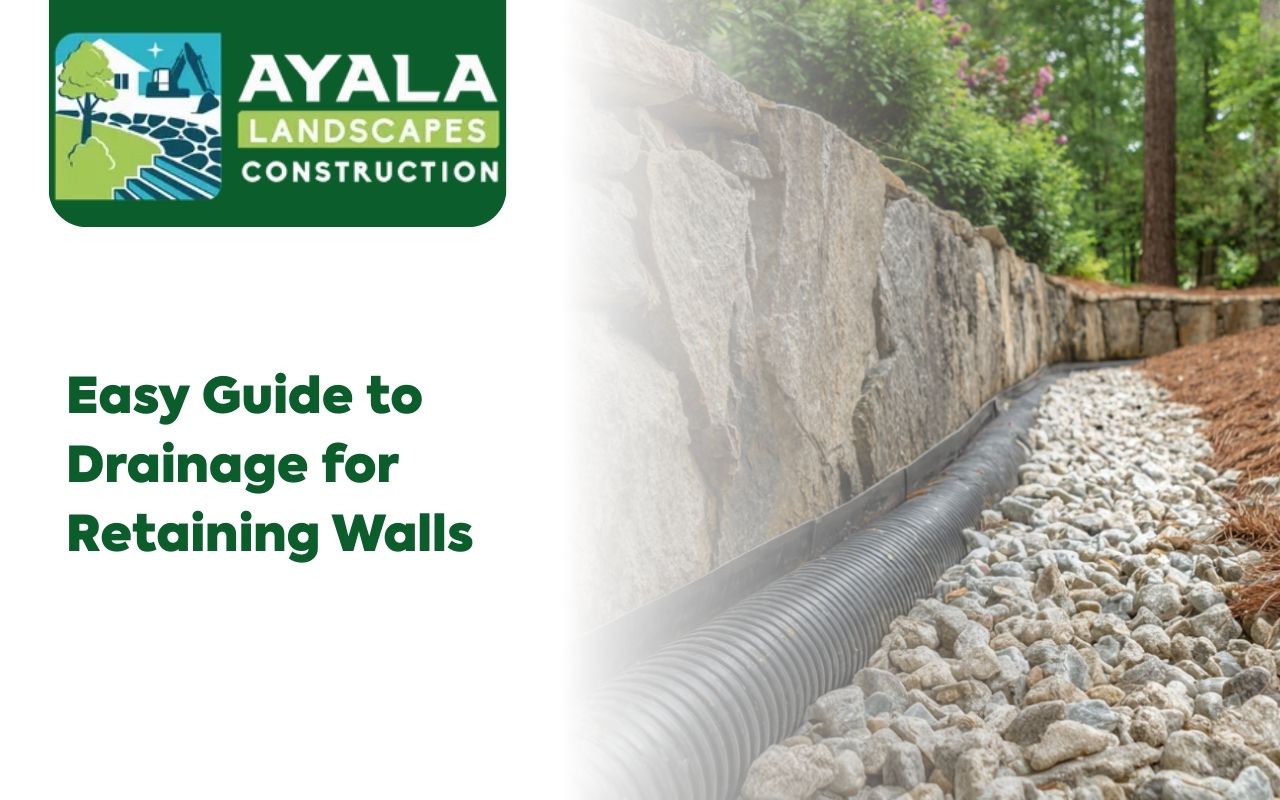
best drainage for retaining walls helps protect your wall from damage. Ayala Landscapes Construction LLC knows that good drainage keeps water moving and lowers repair risks.
A strong wall needs more than nice materials. It also needs the right system to stop water build-up, soil loss, and costly problems over time.
Why Wall Drainage Matters
Ayala Landscapes Construction LLC explains that water trapped behind a wall creates strong pressure. Over time, that pressure can crack blocks, move soil, and weaken the base.
That is why the best drainage for retaining walls is so important. It helps control moisture, reduce erosion, and keep the wall stable in rainy or cold areas.
- Reduces water pressure behind the wall
- Helps stop soil erosion near the base
- Lowers the risk of cracks and movement
For more practical ideas, read retaining wall drainage tips.
Drainage Systems You Can Use
Ayala Landscapes Construction LLC often uses simple systems that fit the site. A French drain, surface drain, gravity slope, or weep holes can each help move water away.
In some yards, one method is enough. However, harder sites may need two systems working together for better protection and smoother water flow.
- French drains move water through gravel and pipe
- Surface drains collect rain from the top area
- Weep holes let trapped water exit the wall
You can also learn more about drainage behind retaining wall methods for different landscapes.
Benefits of Gravel Backfill
gravel backfill drainage is a simple way to help water move down and away. Because gravel is open and porous, it lowers pressure behind the wall.
Ayala Landscapes Construction LLC recommends clean gravel because it is easy to install, easy to maintain, and useful in many wall designs.
- Allows water to pass through fast
- Helps limit freeze and thaw damage
- Works well with pipe systems
How to Add a Pipe Outlet
A retaining wall pipe outlet gives water a clear path to leave the system. First, place a perforated pipe in a gravel-lined trench near the wall base.
Then wrap the trench with fabric to help block soil. Finally, slope the pipe downward so water can move to a safe discharge point.
This step is a key part of retaining wall drainage installation. A good outlet helps stop water from returning to the wall area.
Key Things to Think About
Ayala Landscapes Construction LLC looks at soil, rain, wall height, and yard layout before choosing a system. Clay soil holds water longer, while sandy soil drains faster.
The best drainage for retaining walls also depends on budget and access. Small walls may suit a DIY plan, but large walls often need expert support.
- Check the soil type before building
- Plan for local rain and cold weather
- Match the drainage system to wall size
To improve the full area, visit grading and drainage tips.
Common Problems and Simple Fixes
Blocked pipes and clogged weep holes are common issues. Ayala Landscapes Construction LLC suggests checking outlets after storms and clearing debris as soon as possible.
Low pipe slope can also slow water movement. In that case, the trench may need to be adjusted so water keeps moving away from the wall.
Another issue is soil washing into gravel. Fabric between soil and stone helps keep the drainage area cleaner for longer.
For more ways to protect the wall area, see prevent wall erosion.
Maintenance Steps That Help
Regular care keeps drainage working well. Ayala Landscapes Construction LLC recommends checking pipe outlets, gravel areas, and surface drains after heavy rain.
Remove leaves, trim roots, and look for cracks or bulges along the wall. These small checks can stop larger problems later.
- Clear outlet points after storms
- Inspect gravel for soil build-up
- Watch for wall cracks or movement
DIY or Professional Help?
Some homeowners can handle small projects with basic tools and careful planning. Still, larger walls need more skill because errors can lead to expensive repairs.
Ayala Landscapes Construction LLC can help when the project is complex or close to structures. In many cases, the best drainage for retaining walls comes from expert planning and correct installation.
Frequently Asked Questions
What is the best drainage for retaining walls?
The best drainage for retaining walls usually includes gravel, pipe, and a safe outlet. The right choice depends on soil, rain, and wall size.
Why is gravel backfill useful?
gravel backfill drainage helps water pass through quickly. As a result, it reduces pressure and helps the wall last longer.
Where should a retaining wall pipe outlet go?
A retaining wall pipe outlet should end away from the wall. This helps water leave the system without flowing back.
Can I do retaining wall drainage installation myself?
retaining wall drainage installation can be a DIY job for a small wall. However, large or difficult sites often need a professional.
How often should drainage be checked?
You should inspect the system after strong rain and at least a few times each year. Regular care helps prevent clogs and water damage.
Keep Your Wall Strong Longer
Ayala Landscapes Construction LLC believes smart drainage is the base of a long-lasting wall. The best drainage for retaining walls keeps water moving, lowers pressure, and protects your outdoor space.
For direct help with your next project, visit the contact page of Ayala Landscapes Construction LLC.