
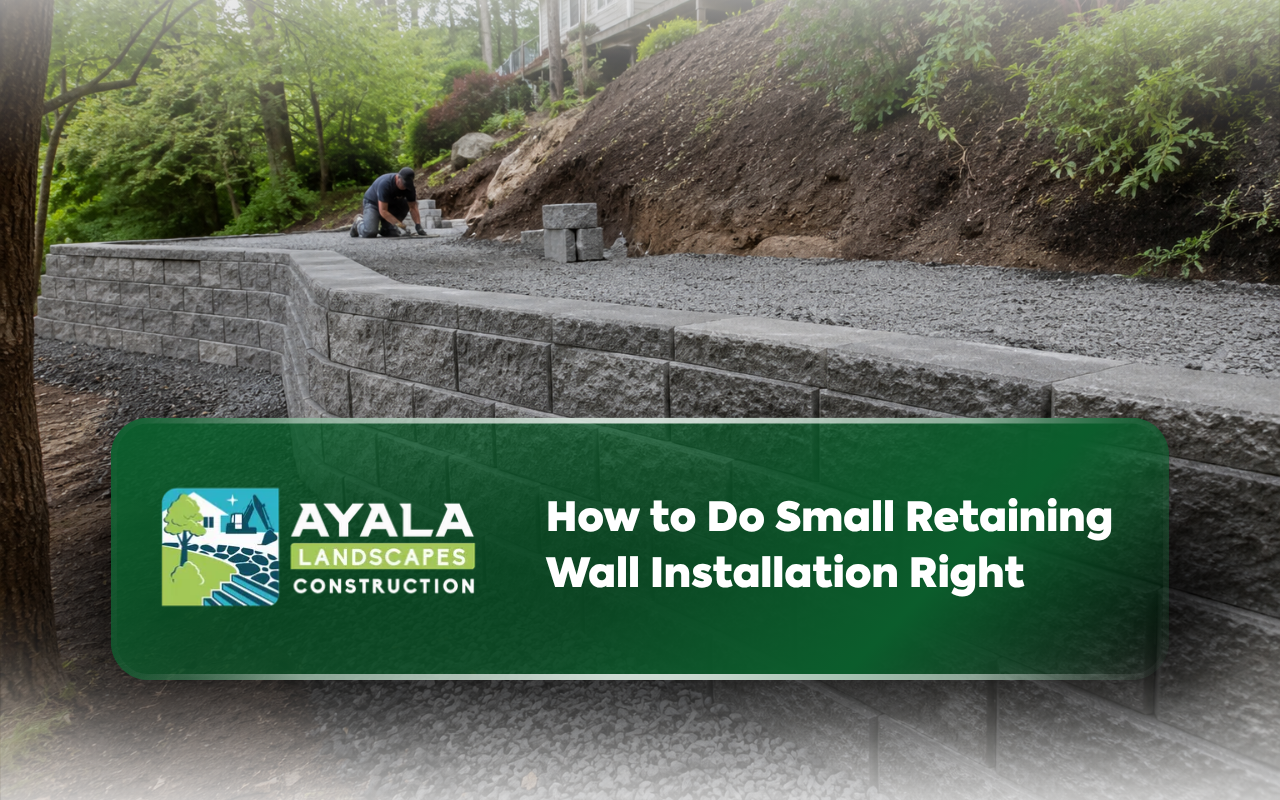
A well-planned small retaining wall can organize garden beds, support soil, and manage a minor slope without dominating your yard. Successful small retaining wall installation starts with a clear purpose, a stable base, and careful attention to drainage.
At Ayala Landscapes Construction LLC, we approach each compact wall as part of the full landscape. The wall should solve a practical problem while matching nearby patios, paths, plants, and outdoor living areas.
Where Small Walls Improve Residential Landscapes
A small retaining wall can create structure in places where soil spreads into walkways or planting areas. It can also define the edge of a garden, separate changes in elevation, or give a sloped yard a cleaner shape. Because the wall stays low, it adds order without making the landscape feel closed in.
A garden retaining wall can frame flowers, shrubs, or decorative gravel while keeping loose soil in place. A short retaining wall may also help create a level planting space on a gentle slope. The best design feels connected to the yard rather than added as a separate feature.
Choosing the Best Location and Wall Purpose
Before starting small retaining wall installation, study how the area handles soil and water. Look for erosion, uneven garden edges, exposed roots, or places where mulch washes downhill. The wall location should support the landscape without blocking walkways, drainage paths, or access to other outdoor features.
- Define the edge of a raised garden bed.
- Support soil along a minor residential slope.
- Create a clear border beside a patio or walkway.
- Separate lawn, gravel, mulch, and planting areas.
- Add shape to a flat or open landscape design.
Think about how the wall connects with your broader hardscaping and retaining wall plans. A compact wall often works best when its lines, materials, and height relate to nearby surfaces.
Materials That Fit a Compact Retaining Wall
Concrete wall blocks are common because their consistent shape makes alignment easier. Natural stone creates a softer, more organic appearance, while brick can support a neat and traditional design. Timber may suit some garden settings, but material selection should account for moisture, soil contact, and long-term movement.
Our team at Ayala Landscapes Construction LLC considers the surrounding home and landscape before recommending a material. Texture and color should complement nearby pavers, steps, borders, and planting beds. The selected units must also suit the wall height, soil conditions, and installation method.
A residential small wall needs more than attractive surface material. The gravel base, backfill, drainage components, and finishing caps all affect its appearance and performance. Choosing these elements together creates a more complete and consistent result.
How Should the Base and Drainage Be Built?
The first course must sit on firm, level ground. During small retaining wall installation, the work area is cleared before a trench is prepared for compacted crushed stone. The base depth depends on the site, wall material, and soil, but it must prevent uneven settling beneath the finished structure.
Drainage is equally important because trapped water can increase pressure behind the wall. Clean gravel behind the blocks gives water space to move. Depending on the location, a drain pipe and filter fabric may also be needed to direct moisture toward a suitable outlet.
Surface water should move away from the wall rather than collect above it. Homeowners planning a wall in the area can review our approach to a retaining wall in Puyallup and the site details that influence construction.
Building a Stable Wall Layer by Layer
A level first row creates the foundation for every course above it. Each block or stone should be checked from front to back and from side to side. Minor errors at the base become more visible as the wall rises, so early adjustments are essential.
- Set and level the first course on compacted base material.
- Stagger joints when placing the next layer.
- Check alignment regularly with a level and string line.
- Add and compact drainage gravel behind the wall.
- Install connectors or adhesive as required by the wall system.
- Finish the top with secure, evenly placed cap units.
When you choose Ayala Landscapes Construction LLC, we build each layer with the full wall system in mind. Proper alignment, backfill, and drainage help the finished wall manage soil while maintaining a clean residential appearance.
Details That Help the Wall Blend In
The finished wall should improve the landscape even when it is not the main focal point. Capstones create a clean top edge, while nearby plants can soften the face. Material transitions should also feel natural where the wall meets a walkway, patio, lawn, or garden bed.
- Use shallow-rooted plants near the wall face.
- Match capstones with nearby pavers or borders.
- Add gravel where clean drainage and separation are needed.
- Keep the wall height balanced with the yard’s scale.
- Use low-voltage lighting where better visibility is useful.
A garden retaining wall can guide movement and create a stronger visual connection between outdoor areas. For help matching the design to your property, use our landscape project contact page to share your goals and site details.
Frequently Asked Questions
What can a small retaining wall support?
A small retaining wall can support garden soil, define raised beds, and manage minor elevation changes. It may also prevent mulch or loose soil from spreading into patios and walkways. The right design depends on the slope, soil conditions, drainage, and nearby landscape features.
How tall should a short retaining wall be?
The correct height depends on the amount of soil being supported and the layout of the property. Local rules may also affect the design. Our retaining wall construction information explains how planning connects the wall to the broader hardscape.
Does every small wall need drainage?
Most walls benefit from a drainage layer because water can collect behind the structure. Gravel, filter fabric, proper grading, and a drain pipe may be used based on the site. With Ayala Landscapes Construction LLC, you receive guidance based on the actual slope and water conditions.
Can a retaining wall define a garden bed?
Yes. A compact wall can create a clear garden edge while holding soil and mulch in place. See examples of small retaining walls for residential landscapes when planning a practical garden boundary.
When should a homeowner request professional installation?
Professional planning is helpful when the ground is uneven, water collects near the wall, or the structure connects with patios and walkways. You can discuss your retaining wall project before choosing materials or preparing the site.
Plan Your Small Wall With Confidence
Careful small retaining wall installation can give your yard better soil control, clearer garden edges, and a more organized layout. The best results come from combining a stable foundation, effective drainage, suitable materials, and a design that fits the scale of the property.
At Ayala Landscapes Construction LLC, we can help you plan a wall that supports your landscape without overwhelming it. Share your slope, garden, or hardscaping needs through our retaining wall consultation page to begin shaping a practical solution.