
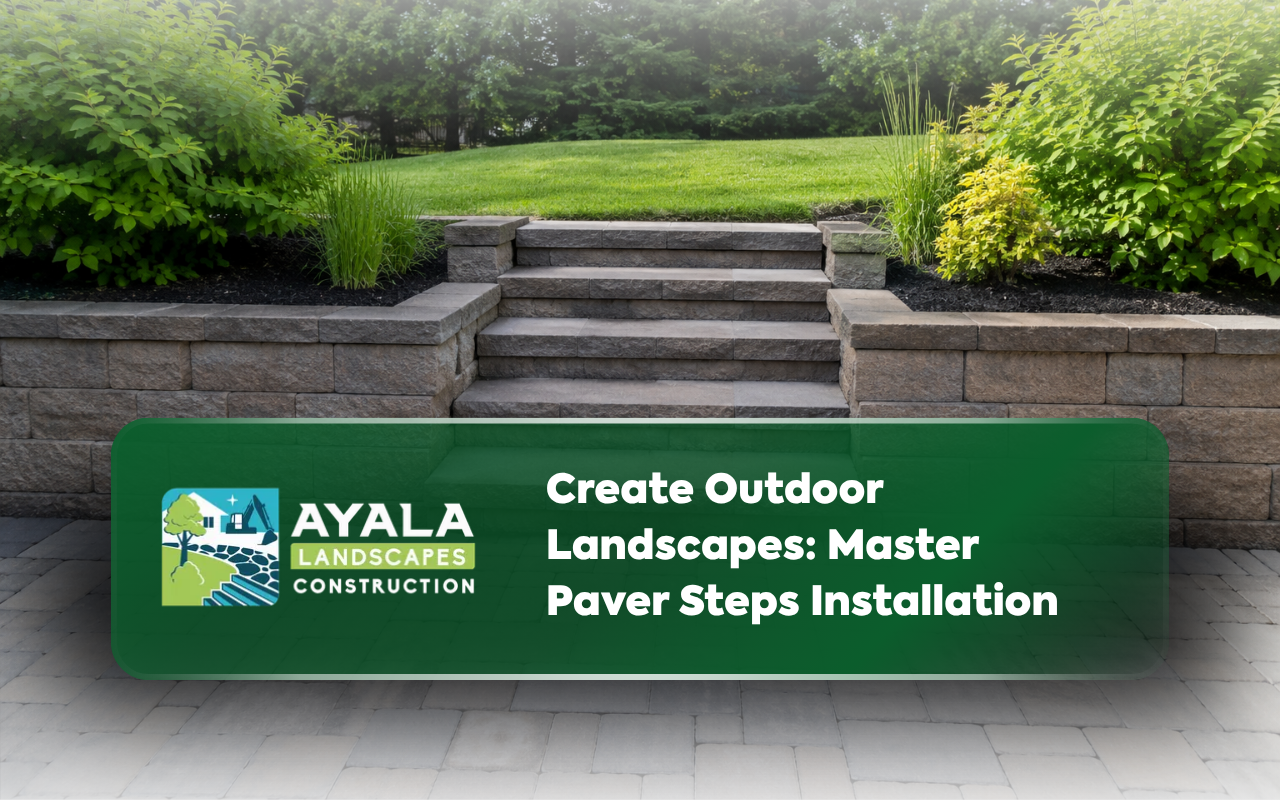
Paver steps can create a smooth and attractive connection between patios, walkways, slopes, and backyard areas. At Ayala Landscapes Construction LLC, we plan each paver steps installation around safe access, comfortable movement, and a design that fits the surrounding landscape.
Well-planned steps can make an uneven yard easier to use while adding structure and visual interest. Our professional paver services can connect different outdoor levels with materials and patterns that complement your property.
Planning Paver Steps for Better Outdoor Flow
A successful paver steps installation begins with understanding how people move through the yard. The steps should create a direct and natural route between key spaces without feeling too steep, narrow, or separate from the landscape.
We consider the height difference, available space, nearby structures, and expected foot traffic. Backyard paver steps may connect a raised patio to a lawn, guide guests down a slope, or create easier access between a walkway and an outdoor seating area.
Step width also affects the overall experience. Wider steps can make an entrance feel open and welcoming, while a compact layout may work better in a narrow side yard. Each step should have a consistent height and depth to support a comfortable walking rhythm.
Which Materials Fit Your Paver Stair Design?
The right material depends on the style of your home, the surrounding hardscape, and the amount of maintenance you prefer. Concrete pavers offer many shapes and textures, while brick can create a traditional appearance. Natural stone may bring more variation in color and surface detail.
With Ayala Landscapes Construction LLC, you can explore materials that coordinate with existing patios, borders, and walkways. Homeowners in the local area can also review our paver options in Spanaway, WA for ideas suited to nearby properties and landscapes.
A strong paver stair design should look connected to the rest of the yard. Matching the step color to an existing patio can create a unified appearance. A contrasting border can also define each edge and make the stairs easier to see.
Building a Stable Base for Safer Steps
A dependable base supports the weight of the pavers and helps reduce movement over time. Proper excavation, drainage, and compaction are important parts of paver steps installation, especially on sloped ground where water and soil movement can affect stability.
- Remove loose soil, roots, grass, and debris from the installation area.
- Prepare enough depth for the base material, setting layer, and pavers.
- Compact the soil and aggregate in even layers for stronger support.
- Plan drainage so water moves away from steps and nearby structures.
- Use suitable edge support to help keep the outside pavers in position.
The base must follow the planned shape and elevation of the stairs. Small errors below the surface can create uneven steps later. Careful preparation supports a level finish and helps each tread remain comfortable under regular foot traffic.
Design Tips for Patios, Slopes, and Walkways
Outdoor steps installation should feel like a natural extension of nearby spaces. Straight steps can support a clean and structured layout, while curved or wider steps may soften the transition between a patio and garden. The best shape depends on the available area and the direction of travel.
Our team at Ayala Landscapes Construction LLC can coordinate the steps with nearby hardscape features. Homeowners planning a larger project may also review our guide on how to build a patio with pavers to understand how connected surfaces can work together.
For backyard paver steps, consider what users will see from the top and bottom. Repeating colors from the patio, adding a defined border, or aligning the stairs with a walkway can improve visual flow. Planting areas beside the steps can soften hard edges without blocking the walking path.
Safety Details That Support Everyday Use
Safe steps depend on more than attractive pavers. Each tread should provide enough room for stable footing, and every riser should follow a consistent height. Clear edges and proper drainage also help people recognize and use the steps with greater confidence.
- Keep tread depths and riser heights consistent from top to bottom.
- Select textured surfaces that support traction during wet conditions.
- Avoid sudden changes in direction near the top or bottom landing.
- Keep plants, furniture, and decorations away from the walking area.
- Add suitable outdoor lighting to make step edges visible after dark.
Lighting can guide movement between outdoor spaces during the evening. Fixtures may be placed near the stairs, along adjacent walls, or beside the walkway. The goal is even visibility without harsh glare that makes it difficult to judge each step.
Care Tips for Long-Lasting Paver Steps
Regular care can help paver steps stay clean, stable, and attractive. Leaves, soil, and organic debris should be removed before they collect along joints or create slippery areas. Gentle cleaning methods are often enough for normal outdoor dirt.
- Sweep the steps regularly to remove leaves, soil, and loose debris.
- Rinse the surface with water and use a mild cleaner when needed.
- Inspect joints for missing sand, weeds, or small signs of movement.
- Address uneven pavers before the height difference becomes more noticeable.
- Check drainage areas to confirm water can move away from the stairs.
At Ayala Landscapes Construction LLC, we encourage homeowners to watch for changes after heavy rain or seasonal ground movement. Early attention to a loose edge or low paver can help preserve safe access and prevent a small concern from affecting a larger section.
Frequently Asked Questions
Where can paver steps be installed?
Paver steps can connect patios, lawns, walkways, garden levels, and sloped sections of a yard. They may also improve access near entrances or outdoor living areas. Our paver installation services can help determine a suitable layout for your property.
How do you choose the right step width?
The width should reflect the available space and expected foot traffic. Wider steps may feel more open and allow two people to walk together. Narrower steps can fit compact areas, but they should still provide a clear and comfortable path.
Can paver steps match an existing patio?
Yes. The pavers can match or complement the patio through similar colors, shapes, textures, or borders. Our paver patio planning guide explains several factors that influence a connected hardscape design.
Are paver steps suitable for sloped backyards?
Paver steps can create a more defined route through a sloped yard when the base, drainage, and dimensions are planned correctly. Homeowners can view our local paver installation information for more ideas related to outdoor spaces in Spanaway.
What makes outdoor steps easier to see?
Contrasting borders, consistent dimensions, open walking areas, and well-placed lighting can make each step easier to recognize. Textured surfaces may also support better footing, while regular cleaning helps prevent leaves and debris from hiding the step edges.
Plan Your Paver Steps With Our Team
Thoughtful paver steps can improve movement, define outdoor spaces, and create a more connected landscape. When you choose Ayala Landscapes Construction LLC, we consider the slope, surrounding hardscape, drainage, materials, and daily access needs before developing a practical design.
Start planning a safer connection between your patio, walkway, slope, or backyard space. Use our paver steps project contact page to share details about your property and the areas you want to connect.