
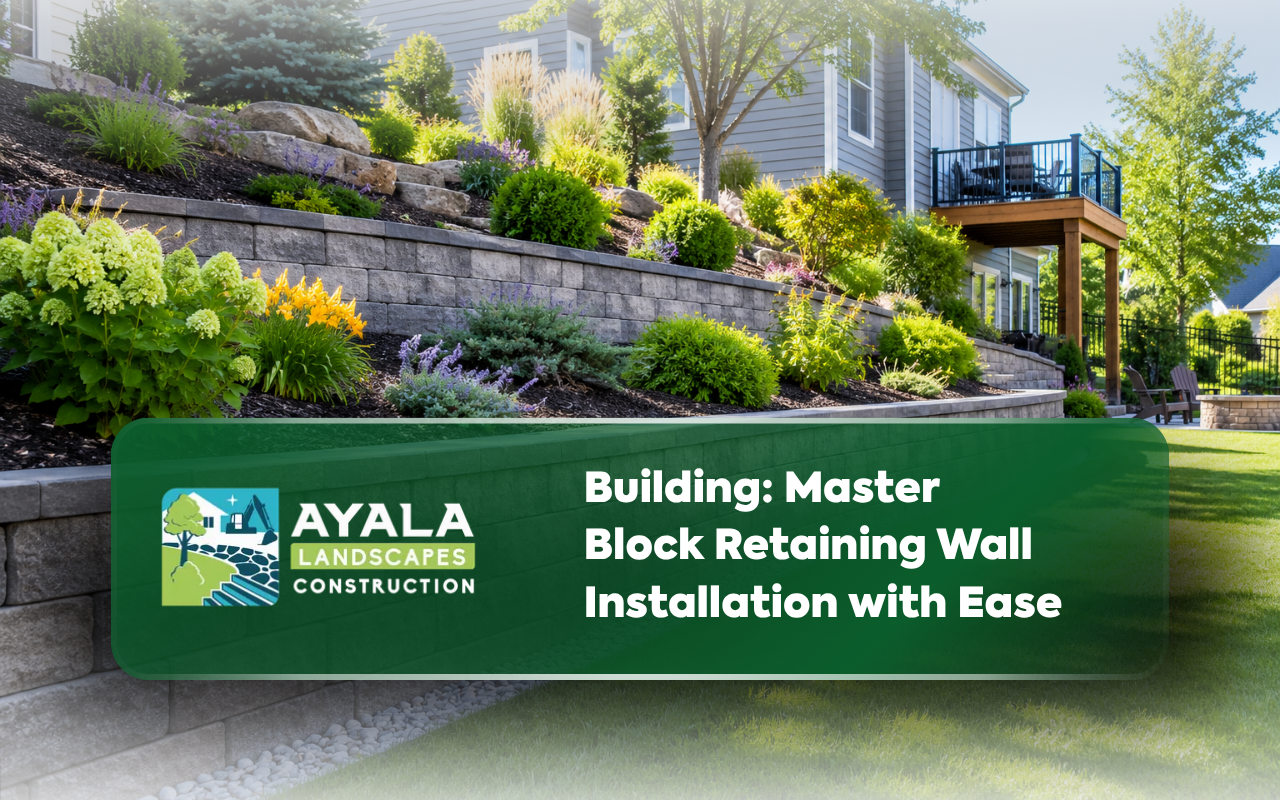
Block retaining wall installation can feel like a big project, but it becomes easier with a clear plan. A good wall can hold soil and shape your yard. For ideas, explore our guide to block retaining wall designs.
At Ayala Landscapes Construction LLC, we believe a result starts with simple choices made in the right order. This guide covers materials, layout, base work, drainage, and care.
Choosing Materials That Fit the Yard
The right retaining wall blocks affect how the wall looks and performs. Concrete blocks come in many sizes, faces, and colors. Some are easier to lift, while heavier units add more support. The best choice depends on slope and soil.
- Choose blocks made for outdoor retaining wall use.
- Use clean gravel that allows water to drain.
- Add leveling sand for a smoother first course.
- Place fabric where soil may wash into gravel.
- Plan for drainage pipe where water collects.
Reading the Land Before Digging
Every yard has a different shape, and that shape matters. Before digging, look at the slope, soil, nearby patios, fences, and water flow. A yard block wall should work with the land, not against it.
Clear roots, loose soil, and debris from the wall line. Then dig a trench wider than the blocks and deep enough for the base. A level trench helps reduce leaning after the wall is built.
What Makes a Block Retaining Wall Last?
A lasting block retaining wall depends on the parts you do not always see. The base must be compacted, the first row must be level, and water needs a place to go. If water stays trapped, pressure can build.
Our team at Ayala Landscapes Construction LLC looks at these details before the wall goes up. We consider soil, height, and rain movement. You can also review our hardscaping and retaining wall services.
Planning Shape, Height, and Purpose
A wall should solve a real need while fitting the space. Some support a slope, frame a patio, or open usable ground. Straight walls look neat, while curved walls feel softer.
- Measure the wall length and planned height.
- Decide if the wall should be straight, curved, or tiered.
- Check local rules for taller retaining walls.
- Think about where rainwater will move.
- Order extra blocks for cuts and corners.
Building a Level Base Course
The first course is the most important part of block retaining wall installation. After the trench is ready, spread the base material and compact it well. Set each block slowly, checking front-to-back and side-to-side level.
This step should not be rushed. A dip in the first row can become a larger issue as more courses are added. When the base is even, the wall is easier to stack and align.
Stacking Blocks and Controlling Water
After the first row is set, place the next courses with staggered joints. This pattern helps tie the wall together. Backfill behind the blocks as the wall rises, using gravel and compacting in layers. Good backfill helps reduce shifting.
- Offset each course so joints do not line up.
- Place gravel behind the wall in steady layers.
- Compact each layer before adding more material.
- Use fabric to keep soil out of drainage areas.
- Send water toward a safe exit point.
With Ayala Landscapes Construction LLC, you can talk through wall location, drainage needs, and finish options before choosing. For local guidance, visit our retaining wall services in Spanaway, WA.
Frequently Asked Questions
How do I know if I need a block retaining wall?
You may need one if soil is washing away, a slope limits yard use, or water collects near outdoor areas. A planned retaining wall or hardscaping solution can help organize the space.
Can retaining wall blocks improve curb appeal?
Yes. Retaining wall blocks can create cleaner edges, raised planting areas, and better transitions between yard levels. They add structure without making the space feel busy.
Does every residential block wall need drainage?
Most residential block wall projects need drainage because water pressure can damage the wall over time. Gravel, fabric, and pipe can move water away. For details, see our local retaining wall page.
How tall can a yard block wall be?
Height depends on soil, slope, block type, and local rules. Taller walls may need added planning or support, so it is best to review the site first.
When should I ask for professional help?
Professional help is wise when the slope is steep, drainage is unclear, or the wall must support heavy soil. When you choose Ayala Landscapes Construction LLC, we can review your goals through our contact page.
Start With a Wall Plan That Works
A strong wall starts with thoughtful planning, solid materials, and careful drainage. Block retaining wall installation should improve the yard while supporting the soil behind it. A level base and compacted backfill can make the wall more reliable.
With Ayala Landscapes Construction LLC, you can move from a rough idea to a clear plan for your outdoor space. To discuss wall goals, yard layout, or soil concerns, request block retaining wall installation guidance today.