
Building a wall may look simple, yet small mistakes can lead to big repairs. We help homeowners understand the retaining wall failures to avoid so they can protect their time, budget, and landscape.
When water, soil, and base work are handled the right way, a wall can stay strong for years. At Ayala Landscapes Construction LLC, we know that careful planning helps prevent stress, delays, and costly rebuilds.
Start With a Clear Site Plan
Every strong wall begins with a careful review of the slope, soil, and water flow. Before building, it helps to check local rules, mark utilities, and study how the site handles rain.
Good planning makes retaining wall failures to avoid easier to spot early. It also helps Ayala Landscapes Construction LLC guide each project with better choices from the ground up.
Control Hydrostatic Pressure Before It Builds
Water trapped behind a wall creates hydrostatic pressure, which pushes hard against the structure. Over time, that pressure can cause cracks, bulging, and movement that weakens the whole system.
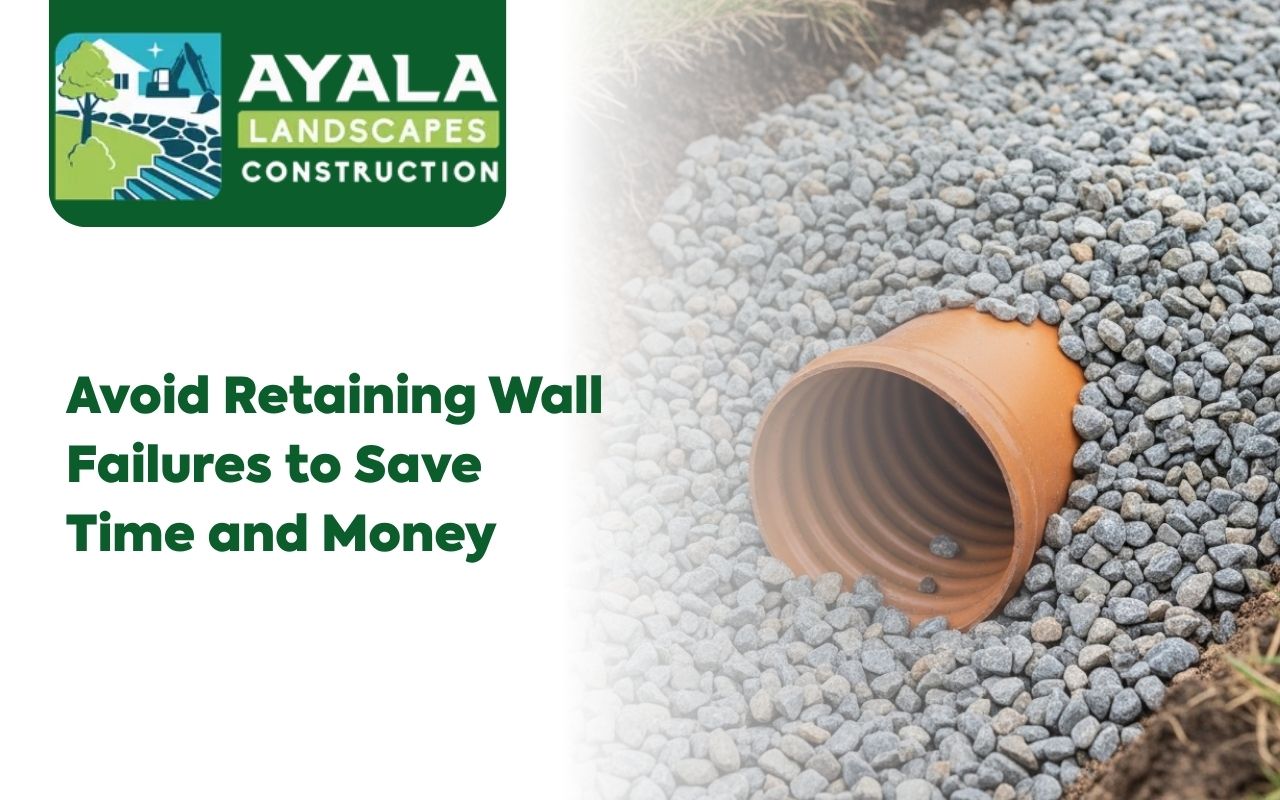
That is why drainage should never be an afterthought. We often recommend proven solutions like proper outlets, gravel backfill, and smart water control, especially when reviewing retaining wall drainage tips.
- Install a drain pipe near the base.
- Use gravel to move water away faster.
- Add exit points so pressure does not stay trapped.
Build on a Stable and Compact Base
A poor base is one of the most common reasons walls lean, crack, or sink. Loose soil under the first course can shift with time, especially after heavy rain or seasonal ground movement.
We remove weak soil, level the trench, and compact stone to create a firm footing. Ayala Landscapes Construction LLC treats this step as essential because a stable base supports everything above it.
Choose Wall Materials That Match the Site
The right material depends on the wall height, soil load, climate, and overall design. Some materials look great but need more skill, while others are easier to install and maintain over time.
When comparing options, we focus on strength, drainage support, and long-term value. Matching the wall system to the site lowers the chance of future damage and helps avoid expensive corrections.
Why does drainage matter so much?
Drainage matters because water is often the hidden force behind early wall damage. Without a clear way out, moisture builds up, increases pressure, and weakens both the backfill and the wall face.
To reduce retaining wall failures to avoid, we connect drainage design with erosion control and backfill choices. Helpful guides like drainage behind retaining wall and prevent wall erosion explain how these parts work together.
Use Geotextile Fabric the Right Way
No fabric behind the wall can lead to clogged gravel and trapped water. Geotextile fabric acts like a filter, letting water pass while holding fine soil back from the drainage layer.
This simple layer plays a big role in reducing retaining wall failures to avoid. Ayala Landscapes Construction LLC uses fabric with proper overlap so the drainage zone stays cleaner and works longer.
- Cover the full height behind the wall.
- Overlap seams to reduce gaps.
- Keep soil separated from the gravel layer.
Know When Professional Help Makes Sense
Some small walls may work as a do-it-yourself project, but taller walls or difficult sites usually need expert planning. Heavy loads, drainage issues, and local code rules can quickly make a project more complex.
We encourage property owners to look at the risk before deciding. Reviewing retaining wall construction quality methods for durability can also help you understand what separates a lasting build from a costly mistake.
Frequently Asked Questions
What is the most common cause of wall failure?
The most common cause is poor water control. When drainage is weak, hydrostatic pressure builds up and pushes against the wall.
Can a poor base really damage a new wall?
Yes. A poor base can cause settling, leaning, and uneven pressure that leads to cracks and movement.
Why is geotextile fabric important?
It keeps soil out of the gravel so water can keep flowing. Without it, the drainage zone may clog faster.
Should every retaining wall have drainage pipe?
Many walls benefit from a drain pipe at the base, especially where water collects often. The exact setup depends on the site and wall type.
How can I get help with my project?
You can reach Ayala Landscapes Construction LLC through our contact page to talk about design, drainage, and the best path for your wall.
Keep Your Retaining Wall Strong Over Time
Even a well-built wall needs simple checks through the years. Clearing drains, watching for movement, and fixing small issues early can prevent larger repairs later.
By focusing on drainage, base strength, and the key retaining wall failures to avoid, Ayala Landscapes Construction LLC helps create walls that stay safer, stronger, and more dependable for the long run.
- Inspect the wall for bulging or cracks.
- Clear outlets and drains when debris appears.
- Address small issues before they become major repairs.