
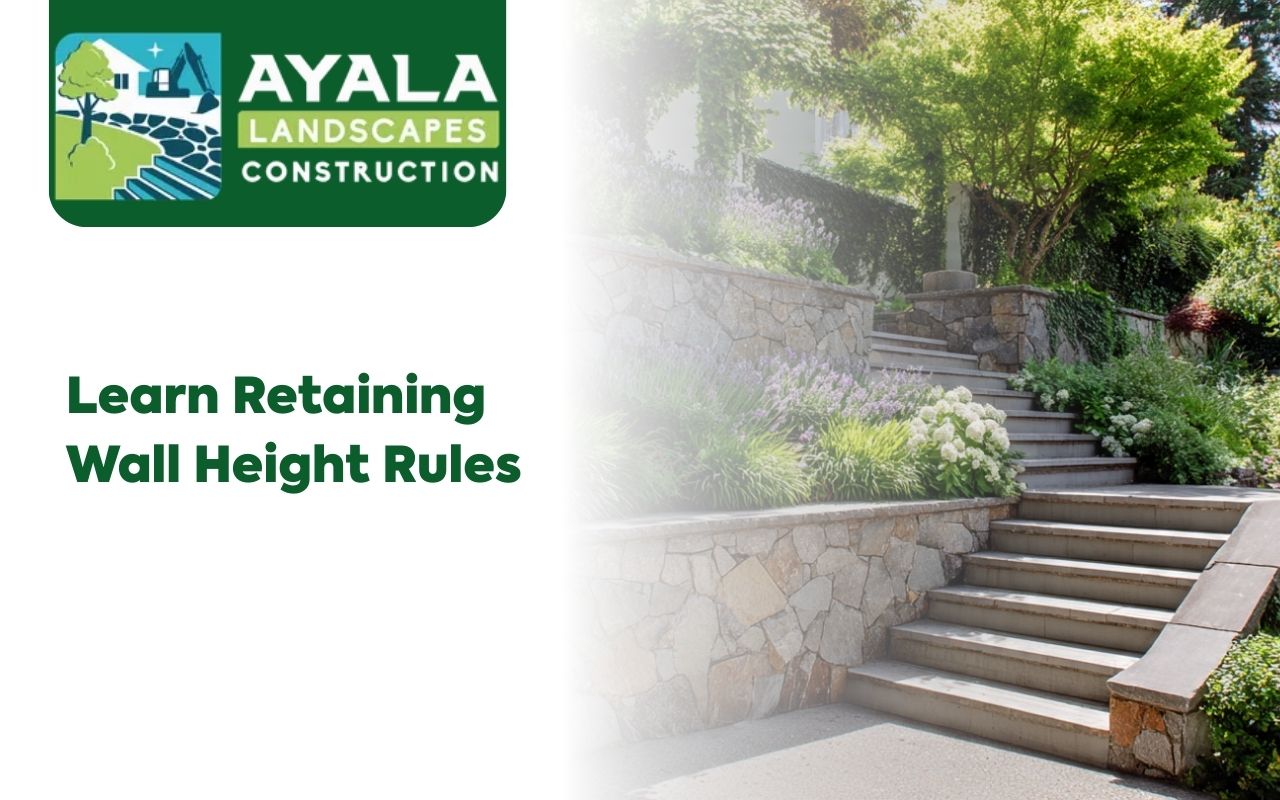
Retaining wall height rules help you build a safe and lasting garden. A wall does more than hold soil. It also protects paths, patios, and planting areas from moving ground.
Ayala Landscapes Construction LLC knows that a small rule can make a big difference. When you understand height limits, safety needs, and soil pressure, your outdoor space can stay strong and look beautiful for years.
Why retaining wall height rules matter
Ayala Landscapes Construction LLC explains that retaining wall height rules protect your yard, home, and nearby areas. A wall that is too tall without the right plan can crack, lean, or fail.
These rules also help stop drainage problems, water pooling, and damage to nearby property. As a result, you save money, avoid stress, and build with more confidence.
Know the 4-ft rule
The 4-ft rule is often the first limit to check. In many places, walls over four feet need permits, approved plans, or expert review. Because of this, early planning can save time and avoid rebuilds.
- Measure from the correct grade point.
- Check if permit rules start at four feet.
- Keep drawings and height notes ready.
Ayala Landscapes Construction LLC can guide homeowners who want a safe wall design and a smooth project path. You can also review durable retaining wall construction methods for more planning ideas.
Guardrails and safe edges
Guardrails may be needed when a wall creates a fall risk. In many areas, this becomes important when the wall is above four feet or near walkways. So, guardrails are not only for safety. They also give the wall a clean finish.
Ayala Landscapes Construction LLC recommends regular checks for loose parts, rust, or rot. Good upkeep helps guardrails stay safe and look neat in every season.
Plan for surcharge loads
Surcharge loads are extra weights near the wall. For example, cars, patios, decks, heavy planters, or stacked wood can add pressure. Therefore, your layout matters as much as the wall itself.
- Keep heavy items away from the wall edge.
- Map decks, sheds, and drive areas early.
- Ask for expert help with load checks.
Ayala Landscapes Construction LLC reviews these details before work starts. This helps the wall resist pressure and stay stable over time.
Choose the right materials
Material choice should match wall height and site needs. Short walls often work well with timber or light blocks. Taller walls usually need stronger systems, such as reinforced concrete block or natural stone.
Ayala Landscapes Construction LLC may also suggest mixed designs. A strong core with a stone face can give you both strength and a warm look.
Build drainage the right way
Water behind a wall adds strong pressure. Because of that, drainage is one of the most important parts of the job. Gravel, drain pipe, and filter fabric help move water away from the wall.
- Use gravel that drains well.
- Place drain pipe at the wall base.
- Keep outlets clear after heavy rain.
For a deeper look, visit drainage behind a retaining wall. Good drainage lowers risk and supports long-term wall health.
Get help for tall walls
Large walls need careful work. Ayala Landscapes Construction LLC advises expert support when the wall passes key limits. An engineer or skilled contractor can check wall width, base depth, drainage, and soil pressure.
Walls over four feet may also need geogrid for more support. This added layer helps the wall hold back soil more safely.
Avoid common wall mistakes
Many problems begin with poor soil checks or weak drainage. DIY shortcuts may look easy at first, yet they can lead to cracks, leaning, and early failure.
Ayala Landscapes Construction LLC recommends routine care after installation too. You can read retaining wall maintenance tips to protect your wall year after year.
Frequently Asked Questions
What does the 4-ft rule mean?
The 4-ft rule often means a wall over four feet may need a permit, approved plans, or expert review. Local code decides the exact rule.
Do all tall walls need guardrails?
Not always, but many sites do. It depends on local rules, wall height, and fall risk near paths, patios, or open edges.
Why are surcharge loads important?
They add extra pressure behind the wall. Heavy items near the top can change how the wall performs and may increase failure risk.
What is the best drainage setup?
A simple system often includes gravel, drain pipe, and filter fabric. These parts help water leave the area behind the wall.
Who can help with retaining wall height rules?
Ayala Landscapes Construction LLC can help you understand retaining wall height rules and plan a safer project for your yard.
Check permits before you build
Retaining wall height rules often connect to permits, setbacks, and site limits. So, contact your local office before work begins. Clear plans with height, drainage, and reinforcement details can speed up approval.
Ayala Landscapes Construction LLC can also help you explore retaining wall ideas in Spanaway while keeping your project practical. For project support, use the Ayala Landscapes Construction LLC contact page.
Simple steps for garden success
When you follow retaining wall height rules, your garden has a better base for long-term success. The right height, safe edges, strong materials, and smart drainage all work together.
Ayala Landscapes Construction LLC believes good planning creates outdoor spaces that are both safe and inviting. With the right help, your wall can support a garden that stays strong and looks great.