
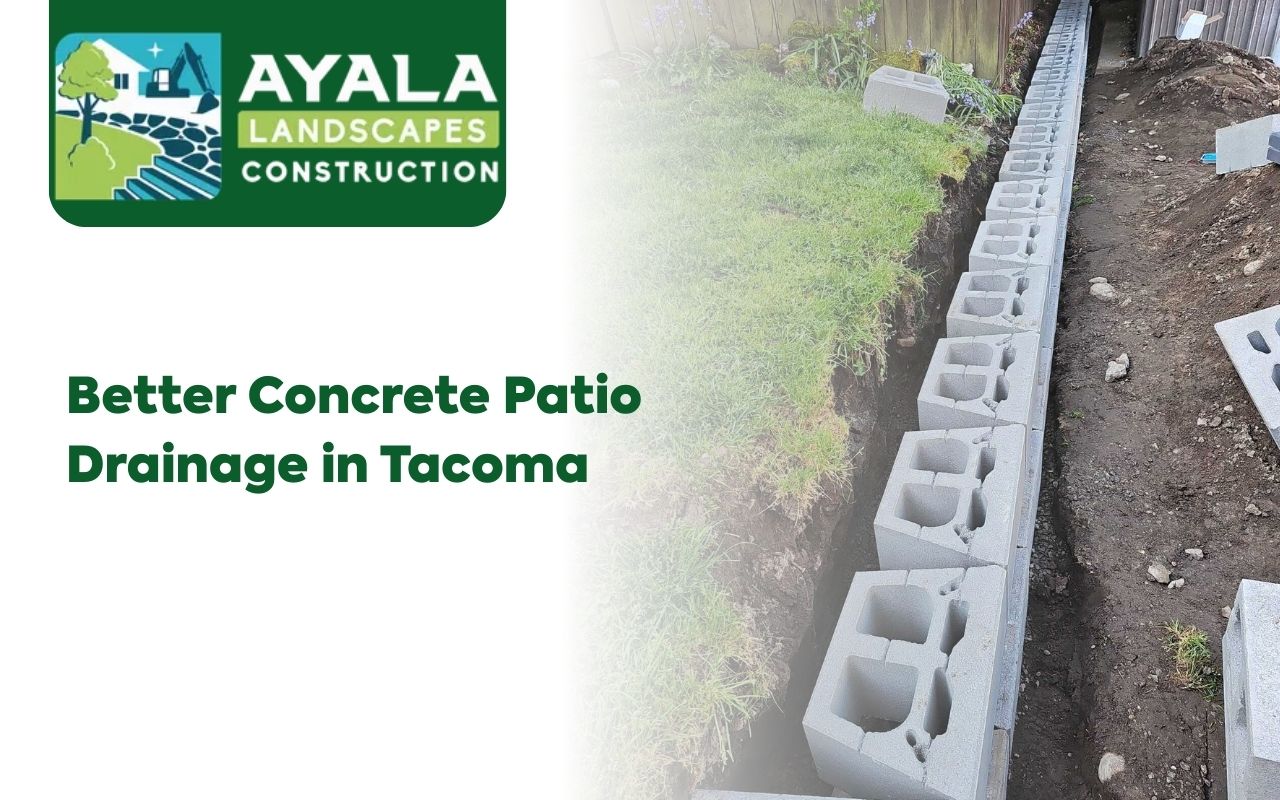
Feel the frustration of stepping onto your patio and finding water pooling after heavy rain. This is common in Tacoma, where changing weather can damage outdoor spaces. Concrete Patio Drainage in Tacoma is not only convenient, but it also protects your patio’s life and safety.
When water sits, it can cause stains, surface wear, and even structural damage over time. Luckily, you can fix many issues by improving slope, adding channel drains, or using permeable joints. In this guide, you’ll learn practical steps to improve Concrete Patio Drainage in Tacoma and protect your investment for years.
Why Proper Patio Drainage Matters
Good drainage moves water away from concrete, which helps prevent long-term damage. When rain or irrigation collects, it can seep into small cracks. Then, freeze-thaw cycles can widen them, and repairs become more costly over time.
Also, standing water can create slippery spots, which raises the risk of slips and falls. With a slight slope and smart drainage options, you can keep your patio safer, cleaner, and more attractive.
- Helps prevent cracking and surface damage
- Reduces slippery puddles and safety risks
- Lowers the chance of mold and algae growth
- Extends the life of the concrete slab
How to Spot Drainage Problems on Your Patio
Start by watching how water moves after rain. Look for puddles that stay longer than 24 hours, especially near doorways or low areas. Then, mark these spots so you can focus your fix where it matters most.
Next, use a long straightedge or level to check the slope. Soil can settle over time, so the patio may no longer drain as it once did. Therefore, this quick check helps you decide if a small adjustment is enough.
- Check for puddles that last more than a day
- Look for low spots near steps and edges
- Use a level to confirm the patio pitch
- Take photos after several storms to compare patterns
Set the Right Slope for Strong Water Flow
If a patio has little slope, water will collect in unwanted areas. A gentle grade helps water move away from the home and toward a safe outlet. Most pros recommend a 1/8–1/4 in/ft slope, because it clears water without feeling steep.
One option is adding a thin bonded topping to guide water in the right direction. However, for severe issues, removing and repouring may be the best long-term fix. Either way, getting the slope right is key for Concrete Patio Drainage in Tacoma.
- Target a 1/8–1/4 in/ft slope away from the house
- Use a bonded topping for minor corrections
- Consider repouring if the slab was poured flat
- Plan a clear discharge area before you begin
Add Channel Drains to Move Water Fast
Channel drains are narrow troughs set into the patio to catch and carry water away. They work best where water naturally collects, such as near steps or along slab edges. As a result, they can reduce standing water quickly and protect the surface.
Install them by cutting a trench, setting the drain sections, and sealing the joints. Then, connect the drain to a safe outlet so water leaves the patio area. This approach supports Concrete Patio Drainage in Tacoma when slope alone is not enough.
If you’re comparing surface options, you may also like the look of hardscape upgrades such as pavers in Tacoma, which can pair well with channel drains in the right layout.
Use Permeable Joints to Reduce Surface Puddles
Permeable joints help water pass through instead of staying on the surface. This can be useful for patios with pavers or decorative layouts. Because the water moves into a gravel base below, puddles are smaller and drainage improves.
For best results, use wider gaps and fill them with free-draining aggregate. Then, build a proper gravel base under the surface so water can move down and away. This method supports Concrete Patio Drainage in Tacoma while keeping the patio comfortable underfoot.
For nearby walkway improvements that can match this style, explore concrete pathways that connect cleanly to a well-drained patio.
Keep Water Moving with Simple Maintenance
Even strong drainage systems can fail when debris builds up. Leaves and dirt can clog drains and block water flow. So, a quick seasonal cleanup helps prevent backups and keeps your patio looking fresh.
Also, check for cracks or settling that could change the way water travels. Fill small cracks early to reduce water entry. In addition, review joints and sealants yearly to keep performance steady.
- Sweep or blow off leaves and soil often
- Clear channel drains after storms
- Seal small cracks before water gets below the slab
- Inspect joints and edge areas once a year
For practical upkeep steps you can follow over time, use these concrete maintenance tips to support long-lasting results.
Pick Surface Finishes That Help Drainage
Your concrete finish affects how water moves. Textured finishes like brushed concrete create small ridges that guide water off the slab. They also improve traction, which is helpful during wet months.
If you like a smoother look, choose sealers with slip-resistant additives. That way, you keep the style you want while still improving safety and water movement.
Frequently Asked Questions
What slope should a concrete patio have for drainage?
A common target is a 1/8–1/4 in/ft slope away from the home. This helps water move off the surface without feeling steep.
Are channel drains worth it on a concrete patio?
Yes, especially when water gathers near steps, doorways, or slab edges. They capture runoff and guide it to a safe outlet.
How do permeable joints help patio drainage?
They let water pass through the joints into a gravel base below. As a result, less water remains on the surface.
Why do puddles form even if my patio used to drain well?
Soil can settle, and small surface shifts can create low spots. Therefore, water collects in those areas after rain.
How often should I maintain patio drainage features?
Check drains and surface areas after major storms, and do a seasonal cleanup. Also, inspect joints and cracks once a year.
When Professional Help Makes Sense
Some issues need more than small fixes. Large settlement, severe cracking, or a slab built with no slope may require a contractor. An experienced team can assess soil conditions and recommend solutions that work together.
If you’re also improving yard water flow, these resources can help you plan smarter systems: a backyard drainage system guide and these grading and drainage tips.
Use Landscaping to Support Natural Drainage
Plants and ground cover can help absorb runoff around the patio. Rain gardens near outlets can slow water and reduce pooling. Also, a shallow swale can guide water away without adding hard trenches.
By blending plants with smart drainage, you improve function and curb appeal at the same time. This is a simple way to support Concrete Patio Drainage in Tacoma with a natural look.
Protect Your Patio with a Simple Drainage Plan
Concrete Patio Drainage in Tacoma improves when you combine the right slope, smart drains, and permeable joints. Also, regular maintenance keeps water moving and prevents long-term wear. Whether you choose a DIY approach or professional support, good drainage protects your patio’s comfort and appearance.
If you want tailored recommendations for your property, connect with Ayala Landscapes Construction LLC through the contact page.